
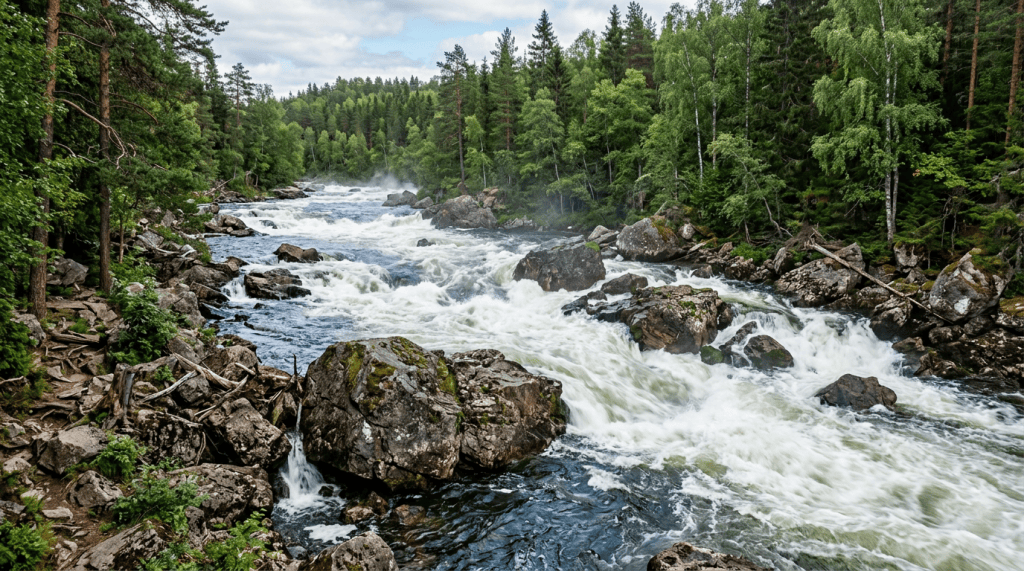
In journeyings often, in perils of waters….
— 2 Corinthians 11:26
By Rick Renner
When my family first moved to the territory of the former Soviet Union, it was at the worst economic time that part of the world had known since the events of the 1917 Bolshevik Revolution. It seemed there was a deficit of everything. Store shelves were empty. Pharmacies had no drugs to offer medical patients. There was little fuel available for automobiles or planes.
In those early days, I was traveling continuously across the eleven time zones of the USSR to obtain contracts for the television programs we broadcast on our television network. Often the pilot of the airplane would announce that the plane was landing because there wasn’t enough fuel to reach our destination. Once we deboarded, we had to get very creative in order to figure out how we were going to get from where we were to the place where we were headed. It usually meant we had to travel by train or by car — and we often had very, very long distances still to go to reach our destination.
But even with all these inconveniences, our situation didn’t begin to compare to what the First-Century preachers had to do in order to get to hard-to-reach places and preach the Gospel. Cars and trains were slower than airplanes, but at least we weren’t walking to get where we needed to go! In Second Corinthians 11:26, however, Paul tells us that he had no choice but to walk in order to reach many of his destinations. He said, “In journeyings often….”
In Journeyings Often
The word “journey” in Greek is odoiporia. This word describes a walking journey. The word “often” is the word pollakis, and it refers to many times, often, or frequently. Paul used this phrase to tell us that he had walked to most of the destinations where he had been called upon to preach.
For instance, he walked from Antioch Pisidia to Iconium (Acts 13:51); he walked from Iconium to Lystra (Acts 14:6); and he walked from Lystra to Derbe (Acts 14:20). From Derbe, he walked back to Lystra (Acts 14:21); and from Lystra he walked back to Iconium (Acts 14:21). From Iconium, he walked back to Antioch Pisidia (Acts 14:21); from Antioch Pisidia, he walked throughout the whole region of Pamphylia (Acts 14:24); and then he walked all the way to Perga (Acts 14:25).
For a brief period, Paul and his team traveled by ship to Antioch (Paul’s home base). But then they walked to Phenice and Samaria (Acts 15:3). From there, they walked to Jerusalem (Acts 15:4); and from Jerusalem, they walked back to Antioch (Acts 15:22).
From Antioch, Paul walked throughout the regions of Syria and Cilicia (Acts 15:41). He walked back through the cities of Derbe (Acts 16:1) and Lystra (Acts 16:1). Then he walked to Phrygia (Acts 16:6) and walked throughout the regions of Galatia (Acts 16:6). After that, he walked to Mysia (Acts 16:8) and then walked all the way down to Troas (Acts 16:8).
After seeing a vision of a man in Macedonia calling to him for help (Acts 16:9), Paul took a ship from Troas (Acts 16:11). His ship ported in the city of Samothracia (Acts 16:11) but departed the next day to Neapolis (Acts 16:11). From there, Paul and his associates sailed to Philippi (Acts 16:12), a chief city in that part of Macedonia.
From Philippi, Paul walked through Amphipolis and Apollonia (Acts 17:1); then he walked to the city of Thessalonica (Acts 17:1). From Thessalonica, Paul walked to Berea (Acts 17:10).
Paul took a ship from Berea to Athens (Acts 17:14,15). From Athens, he walked to Corinth (Acts 18:1). He sailed from Corinth to Syria (Acts 18:18). Then from Syria, he walked to Ephesus (Acts 18:19). From Ephesus, he sailed to Caesarea (Acts 18:22); but from there, he walked to Antioch (Acts 18:22). From Antioch, he walked all over the regions of Galatia and Phrygia (Acts 18:23), and then he walked along the upper coastlines to Ephesus (Acts 19:1). The list of places where Paul traveled to fulfill his calling is amazing. Paul did a lot of walking during the course of his ministry!
If you add up all the miles/kilometers Paul walked, he probably spent more time walking than he did preaching. No wonder he could say, “I thank my God, I speak with tongues more than you all” (1 Corinthians 14:18). Paul had a lot of time to pray in tongues as he walked across the east and northeast side of the Mediterranean countries to preach the Gospel and to establish the Church.
This also gives us insight into the kind of relationships Paul had with his fellow travelers. It would have been impossible for him to travel so far, so regularly, and through such difficult circumstances without really getting to know his traveling companions. No wonder he could tell Timothy, “But thou hast fully known my doctrine, manner of life, purpose, faith, longsuffering, charity, patience, persecutions, afflictions…” (2 Timothy 3:10,11).
Keep in mind that the man who did all this walking was the same one whose feet had been beaten with rods three times (see October 21)! Paul could only have walked this extensively if he enjoyed a healthy body. A sick man could never have attempted this kind of physical exertion. Therefore, we know that although Paul’s feet had been beaten with rods, he suffered no remaining effects from those hideous beatings. Here again, we see that Paul knew how to draw upon the resurrection power of God to quicken his mortal flesh.
In today’s society, many people circle parking lots for twenty minutes just to look for a closer parking space. But the truth is, if they parked farther away, it still wouldn’t take but five minutes to walk to their destination! People are often simply too lazy to walk unless they are forced to do it.
Paul had no car, train, or airplane to ride in order to get where he needed to go. Yes, traveling that far by foot meant he had to face incredible hardship and difficult circumstances. But nothing was so difficult to bear that it was going to stop Paul from fulfilling the call on his life. He had made up his mind. Even if it meant walking around the world by foot in order to fulfill his call, that is precisely what he would do.
If modern transportation had been available, Paul would have used it. Today cars, trains, and airplanes permit us to travel farther and faster and to take the Gospel to the ends of the earth. But the lack of these conveniences didn’t stop Paul.
Yet how frequently does lack of convenience stop us today? If we allow lack of convenience to hinder us from doing the will of God, there is a serious flaw in our level of commitment.
I’m sure that as Paul traveled on these roads, he encountered literal impasses on roads that forced him to take unexpected, unplanned detours, costing him more time, effort, and money. Still he pressed onward to take the message of God’s Kingdom to the Gentile world.
In Perils of Waters
After referring to these long walking journeys, Paul also says, “…In perils of waters…” (2 Corinthians 11:26). The word “perils” is the word kindunos. It is the Greek word for an extremely dangerous or highly volatile situation. Paul uses this word eight times in Second Corinthians 11 to tell us that much of his ministry required him to live in extremely dangerous situations. He basically lived in danger all the time. Danger wasn’t something he sought. It simply went with the territory God gave him.
The word “waters” is the Greek word potamos, which is the Greek word for a river. By using these two words kindunosand potamos, Paul tells us that as he traveled, he was occasionally forced to cross extremely dangerous rivers to get to the places where the Holy Spirit sent him.
Crossing rivers was a very serious act in the ancient world. It’s a vivid example of the hazards a traveler encountered in Paul’s time. Bridges were few and far between, especially in remote areas. This presented awkward problems, especially during times of flash-flooding, which was a frequent occurrence. Although Paul does not mention the exact rivers he had to cross, we know that they would have included the Jordan River (Judea), the Orontes River (Syria), the Cydnus River(Cilicia), the Meander River and Cayster River (Asia), and the Strimon River and Axios River (Macedonia).
During Paul’s journeys, he crossed “badlands,” climbed cliffs, scaled bluffs, and passed through some of the most dangerous rivers of his time. We don’t usually think of these kinds of hazards when remembering Paul’s ministry. But these were daily risks Paul faced to do God’s will.
How many people do you know who would put their lives at such risk to do God’s will?
I am always amazed at the number of people who write to my family with concern when they hear of political unrest in our nation. They often tell me, “You and your family need to get out of there before it gets too tough! God doesn’t want you to get caught in a difficult situation!” But if the Early Church and other God-called people through the last two millennia had taken that approach, none of us would know of the Gospel today!
Regardless of what you face or what you cross through to fulfill God’s plan, nothing takes God by surprise. Certainly He didn’t plan those problems. But when He called you, He equipped you with all the power, wisdom, and insight you would ever need to get across the hurdles Satan tries to put in your way. There is no impasse you cannot get through on your way to achieve God’s will for your life!
. . . . . . . . . . . . . . . . . . . . .
Rick Renner is a prolific author and a highly respected Bible teacher and a leader in the international Christian community. He is the author of more than 30 books, including the bestsellers Dressed To Kill and Sparkling Gems From the Greek.
In 1992, Rick and his family moved to what is now the former Soviet Union, where they founded the Moscow Good News Church. In 2007, the Renners also launched the Kyiv Good News Church in the capital of Ukraine. Today, Rick serves as Bishop for this group of churches.
Rick also founded Media Mir, the first Christian television network established in the former USSR. Its broadcast capabilities via stations and by satellite means millions of people are reached with these messages. It has since expanded into book publishing and managing social media accounts. Website: Renner.org




Leave a Reply