
ESPAÑOL: ¿La copa adivinatoria de José?
Most are familiar with the story of the ancient patriarch Joseph, who was sold into slavery by his jealous brothers, and would eventually rise to second in command in Egypt.
But the account contains an interesting detail where archaeology confirms the Bible.
The Hyksos were a Semitic tribe, related to the Jews, who had taken over the northern half of Egypt, driving the Egyptians into the southern part of the Nile delta. They ruled Egypt from around 1800 BC to 1550 BC.
Joseph showed up in Egypt during the Hyksos rule and this explains why he was able to rise in power at this time. He had a similar language and culture as the Hyksos. We even see clues of the Hyksos reign in the Book of Genesis.
When Joseph’s brothers were forced to go to Egypt for food because of a famine in Canaan, Joseph disguised himself, so they didn’t immediately recognize him as their brother.
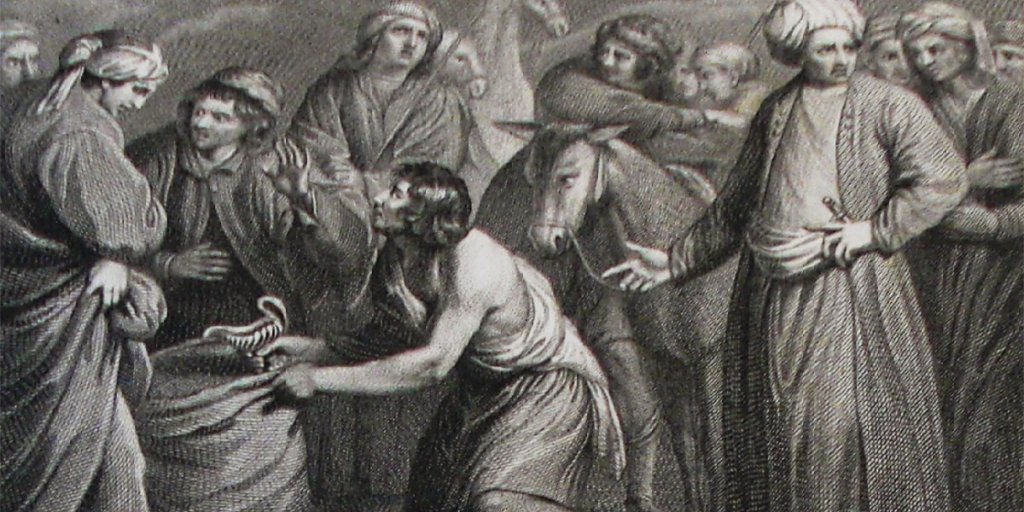
After giving them food, Joseph sets a trap by telling his steward to secretly place a silver cup inside the bag of the youngest brother, so they could later be accused of theft (Genesis 44:1-2).
After they left, Joseph sent men to stop his brothers and after opening their bags and seeing the cup, the brothers were hauled back to the palace.
But this was no ordinary cup.
‘Why have you repaid evil for good?”, the Egyptian guards asked. “Is this not that from which my lord drinks, and which he indeed uses for divination?” (Genesis 44:4-5 NASV).
This was a very important cup, because it was the one that Joseph allegedly used for divination:
According to the Armstrong Institute for Biblical Archaeology, these diviner cups typically made of silver or gold were widely used by the Hyksos.
Archaeologists have not only found several examples of these diviner cups dated to this period when the Hyksos ruled Egypt, but they have also found a manual written on two clay tablets on how to use them.
Cup-divination, also called lecanomancy, involved dropping oil into a diviner cup filled with water. The diviner interpreted the oil’s dispersal patterns to answer questions or predict the future.
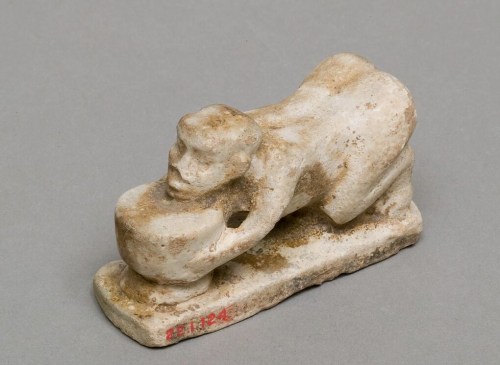
Carvings have been found of people on their hands and knees peering into a cup to interpret the oil as it dispersed on the water’s surface.
But if this was actually Joseph’s diviner cup, it leads to a more difficult question. Did Joseph use a diviner’s cup to predict the future?
And if so, would this not violate the later Biblical command in Leviticus 19:26 forbidding the Hebrews to practice divination? It is the same Hebrew word, nâchash, in both verses.
I think we need to remember two things. At the start, Joseph had disguised himself, so his brothers wouldn’t recognize him. He was playing the role of this Egyptian administrator as they would expect him to appear and act.
Secondly, we have the interesting statement that Joseph makes in verse 15, after the brothers had been hauled back.
“What deed is this that you have done? Do you not know that a man like me can indeed practice divination?”, Joseph said.
Joseph was essentially telling them not to be shocked by their capture, since he could divine. But since they had allegedly taken the diviner cup, what Joseph was actually saying is that he did not need a magic aid such as a diviner cup to know the future.
Though up to this point everything had been a ruse, Joseph did tell the truth about this ability, because through his time in Egypt he was able to predict the future through the gift of interpreting dreams.
In Genesis 40:1-19, he successfully interpreted the dreams of the Pharaoh’s baker and cupbearer who were in prison with him at the time. He also interpreted the Pharaoh’s dream that spoke of a coming famine in Genesis 41:25-36.
Even as a young boy in Canaan he was having dreams, one of which predicted that his brothers would be bowing down to him (Genesis 37:5-11).
God was speaking to Joseph, but not through a diviner’s cup.
But the Diviner’s cup reveals once again how archaeology confirms the accuracy of some of the smallest details described in the Old Testament.




Leave a Reply