
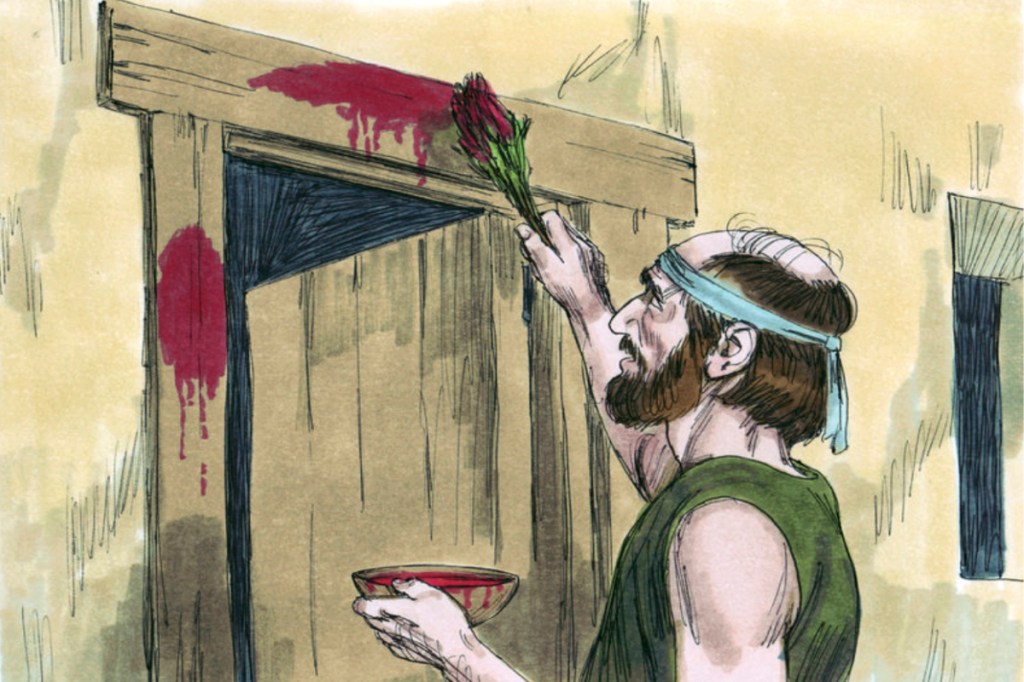
Credit: Distant Shores Media:Sweet Publishing, Wikipedia, CC BY-SA 3.0
The Daily Mail had an interesting article on the Ipuwer Papyrus, an ancient Egyptian document, that confirms the Exodus account of the ten plagues.
After God raised up Moses to lead Israel out of Egypt, the pharaoh needed a bit of convincing to let them go. So God sent ten plagues culminating in the death of the first born that finally forced the pharaoh to let Israel leave.
It was interesting to see the secular media picking up on this story. The papyrus, which is now displayed at the Dutch National Museum of Antiquities, put an interesting twist on the plagues. This is because it recounts them from an Egyptian perspective.
In fact, the author of the document is warning the current Pharaoh that unless they change their ways, God would sent plagues on the country as He had done in the past.
“No conclusive evidence exists to pinpoint the exact date of its composition,” wrote Michael Lane, a British historian, in an analysis of the document. “But because of its written style, it appears to have been written by an eyewitness. A large number of scholars place it around the time of the biblical date of 1440BC.”
In the first of the plagues, Moses touched the Nile River and turned it to blood (Exodus 7:20).
“The Ipuwer Papyrus appears to describe many of these same events,” writes Stacy Liberatore in her Daily Mail article. “As one line reads, “‘There’s blood everywhere…Lo, the River is blood,’ mirroring the Nile turning to blood in the Bible.”
Then in a reference to the seventh plague cited in Exodus 9:18-35, that describes devastating storms involving lightening and hail, Liberatore adds:
“The papyrus also describes environmental devastation: ‘Lo, trees are felled, branches stripped,’ likely reflecting the hailstorm that destroyed crops, and ‘Lo, grain is lacking on all sides,’ illustrating widespread famine.”
One of the more interesting tidbits in the Ipuwer Papyrus is that it also describes a massive transfer of wealth from the rich ruling class to slaves.
It writes, “Gold and lapis Iazuli, silver, malachite, carnelian and bronze … are fastened on the neck of female slaves.”
This is exactly what happened when the Pharaoh finally relented after the death of the firstborn and let Israel leave. The Egyptians handed over their silver and gold to the Israelis.
Moses describes it this way:
“Now the sons of Israel had done according to the word of Moses, for they had requested from the Egyptians articles of silver and articles of gold, and clothing; 36 and the Lord had given the people favor in the sight of the Egyptians, so that they let them have their request. Thus they plundered the Egyptians.” (Exodus 12:35-36 NASV)
If the Ipuwer Papyrus is describing Israel’s exodus out of Egypt, it reveals that Israel’s departure took place much earlier than generally believed.
While major films on the Exodus have typically portrayed Ramesses (1279-1213 BC) as the pharaoh of the Exodus, the papyrus suggest it happened about two hundred years earlier, around 1450 BC.
This would coincide with the Egyptians finally being able to drive out the Hyksos, a semitic group, who had taken over the northern part of the Nile Delta around 1800 BC.
Reading the comments, the mockers were out in force. Rather than letting the evidence and archaeology speak for itself, they made fun of it.
Huffington McMonkey wrote: “Time for a whole new section, let’s stick all this hogwash where it belongs and have a ‘Myths and Fantasies’ section. Keep the science section for actual science.”
But Nimmbar responded to the mockers with this comment: “The scoffers are alive and well for now but the day will come when they finally have to accept the truth and their scoffing will forever be silenced.”


 OpentheWord.org
Leave a comment