
Credit: Wikipedia, Public Domain
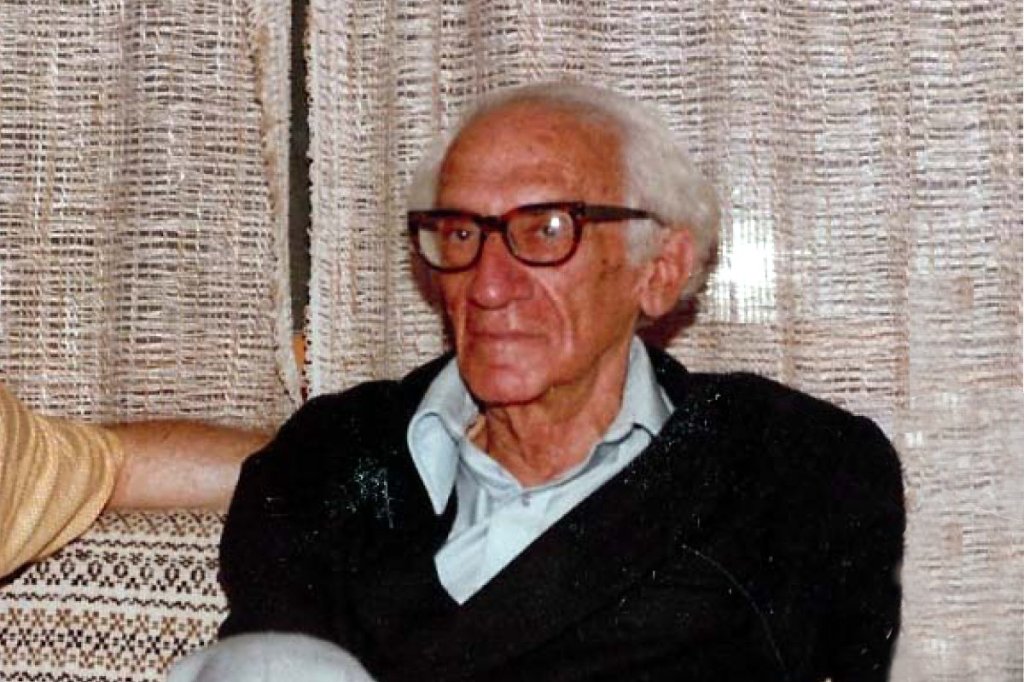
Do you know the name Immanuel Velikovsky? Probably not, although he is becoming more famous now.
Velikovsky was a scientist or a psychoanalyst from Russia, specifically from the smaller Russian country of Belarus. Also, he was Jewish, and he had some knowledge of the Jewish Bible, the Christian “Old Testament.”
He published a very popular book “Worlds in Collision” around the year 1950, and for a short time his book was a best seller and he was popular and famous.
His career ended and never restarted, and apparently the editor who published his book was fired. If science is a religion, Immanuel Velikovsky is a science heretic.
Until recently, respectable scientists, especially those who worked as professors in universities, avoided talking about him, or aggressively denounced him as a scientific fraud.
The emotion is shocking, when I read some of the strong reactions from respectable scientists and professors. They really don’t like him.
Religious Bible scholars, who are mostly Christians, may disagree with him on specific points, but with less anger than the scientists.
There is a third group. There are many people now, who like his ideas, and think that he was correct. There are Internet articles and videos that claim “Immanuel Velikovsky was right.” If you use those words in a search, you will find many articles and videos about this almost famous man.
So, how do we make sense of this two or three way argument? And why is Velikovsky so unacceptable to secular scientists?
We can look at small details, like what Velikovsky said about the planet Venus. He believed that the planet Venus entered the solar system fairly recently, for example, and this caused severe catastrophes on the Earth, including tidal surges and massive storm systems.
That might explain ancient stories about disturbances on the Earth. It is interesting that every culture in the world has stories about massive disturbances, and there is now some evidence to support many of these ideas.
Remember, the ancient Greeks had stories about a lost city of Atlantis, and the Bible has many stories about massive changes on the Earth. For example, the opening words of the Bible are:
In the beginning God created the heavens and the earth. The earth was formless and barren, and darkness covered the abyss while the Spirit of God hovered over the waters. God said ... (Genesis 1: 1 to 3)
That is all interesting, and people who support these ideas believe that they are correct, but there is something more, that we should see.
The foundation.
Every belief system is supported by foundational beliefs. The Bible gives believers the picture of massive changes, and they always involve God. Every story in the Bible involves God intervening, and doing something among us. These stories make no sense, unless we include the foundation story, which is God acting on this Earth.
We may miss the point, but secular science often has a belief system, and it is a ‘no God’ universe, where all life happened by chance. The great apostle of this Atheistic belief system is Charles Darwin, a man educated to be a Christian minister. We might describe him as an Atheist theologian.
One problem, that Darwin understood, is that his no-God system requires stable conditions over many billions of years. Picture the Earth as a laboratory where conditions are kept stable and constant, known as “uniformitarianism”, so the evolution of life can proceed (without God). Disturbances, catastrophes, make Darwin’s model unlikely, and open the possibility for a God who is out there somewhere. The name for this system is “catastrophism.”
Velikovsky was a scientific catastrophist therefore he was, and is, rejected. His ideas destroy the foundation of the entire belief system, like the religion, of western secularism. If we understand that, we can understand that there is a battle, in our culture, for control of the foundations of what we believe.
I believe that this is a spiritual battle. Immanuel Velikovsky respected the stories from old cultures, including the oldest stories in the Bible, and tried to understand why people described huge changes in the world around them. He didn’t argue about God, but he did argue for a world where God was a real possibility.
He went back to the old foundation and he was rejected as an unacceptable heretic by his secular colleagues. Immanuel Velikovsky opened a door that they wanted to keep shut.
Among Christians, there are secular belief systems, or theologies, that we might name as Modernism or Liberal Theology. These systems are very much on the secular side of the argument, with foundational beliefs that do not require an actual God.
Where I live, Christian churches like that are very common.
I believe it is always wise to understand the foundations of what we believe. If we believe in God, do we believe that this divine being makes changes in our world, and in our lives? Or do we believe in some kind of “wisdom” that might somehow influence us in a good way?
No-God religion is more common than most of us know. Immanuel Velikovsky illustrated a lesson in spiritual things, if we are willing to notice.
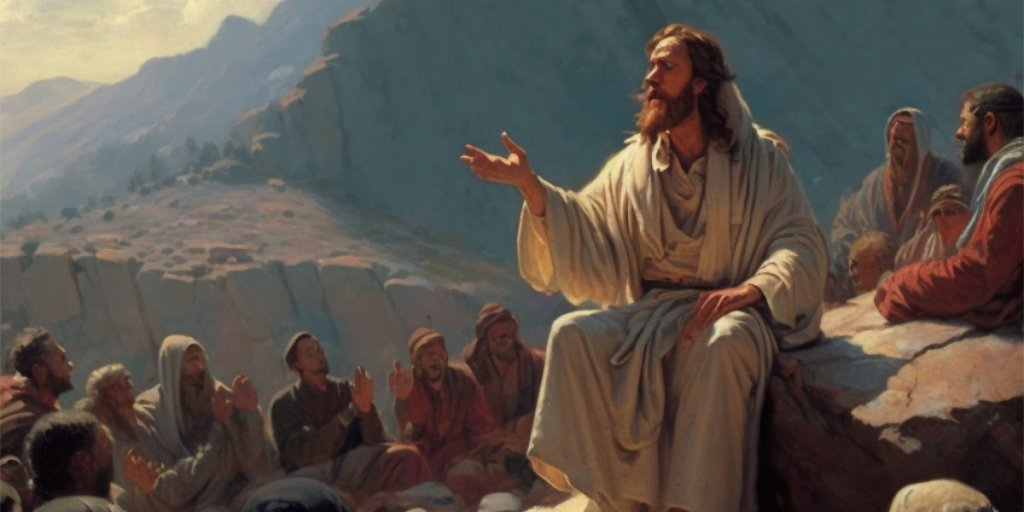
Jesus told us:
Everyone then who hears these words of mine and does them will be like a wise man who built his house on the rock. And the rain fell, and the floods came, and the winds blew and beat on that house, but it did not fall, because it had been founded on the rock. And everyone who hears these words of mine and does not do them will be like a foolish man who built his house on the sand. And the rain fell, and the floods came, and the winds blew and beat against that house, and it fell, and great was the fall of it. (Matthew 7: 24 to 27)

 OpentheWord.org
Leave a comment