
FOLLOW OUR PODCAST ON (search opentheword):
- Spotify
- Apple Podcasts
- IHeartRadio
- Listen Notes
- TuneIn
- Podchaser
- YouTube Music Podcasts (audio)
- Amazon podcasts
PODCAST NOTES:
While skeptics have questioned Moses’ existence because there is no mention of him in the Egyptian records, an interesting article in the Daily Mail suggests this may not have been the case.
The article, based on research provided by the Armstrong Institute of Biblical Archaeology, states that a mysterious man by the name of Senenmut who rose to incredible heights within the Egyptian Empire was none other than Moses.
Senenmut was his Egyptian name, and Moses his Hebrew one.
Most of us are familiar with the story of Moses who was raised by the Pharaoh’s daughter after his Hebrew mother put him in a basket on the Nile River to save him from the Pharaoh’s order to kill all the Hebrew male infants.
And this is when the interesting parallels begin to appear.
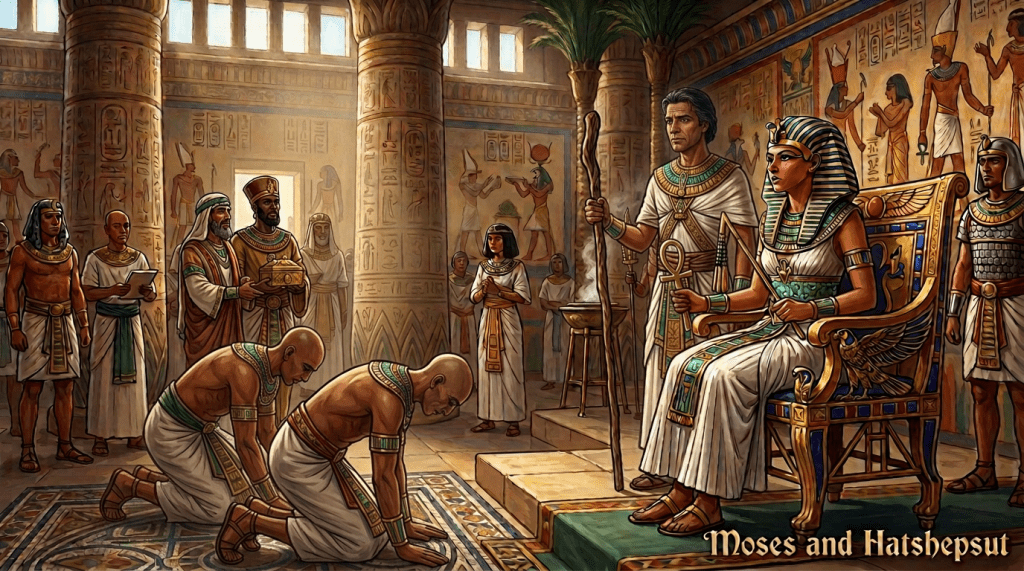
First, the Egyptian records reveal that Senenmut was a commoner who first rose to prominence during the reign of Hatshepsut, one of Egypt’s first female pharaohs.
Writing for the Armstrong Institute, Christopher Eames believes Hatshepsut as a young princess was the one who found Moses in the Nile marsh and raised him as her own son.
The Egyptian records even state that Hatshepsut’s spirit was “inclined toward foreign people.” We know from the Biblical record, that the princess recognized immediately this was a Hebrew baby (Exodus 2:6), but took him in anyways.
Other Egyptian records state that Senenmut had ‘come forth from the flood’ — echoing the Biblical account in which Moses received his name because Pharaoh’s daughter ‘drew him out of the water’ (Exodus 2:10).
Additionally, Senenmut was even given a god-like status because other Egyptian records state that he was able to control ‘even the Nile.’
Coincidentally, the first of the plagues that God had Moses perform was turning the Nile blood red. From the Egyptian perspective it looked like Moses had killed the Nile.
This god-like status may explain why Senenmut became so powerful in the Egyptian government.
When Hatshepsut rose to Pharaoh around 1479 BC, Senenmut became one of her key advisors. He was a powerful man who received over 90 titles.
Senenmut was an architect and heavily involved in construction projects. This would explain why Moses was on a building site when he caught an Egyptian guard beating a Hebrew slave.
But the fact that Moses was able to dispatch an armed Egyptian also links him to Senenmut. This is because the Egyptian records reveal that Senenmut was a military commander who led several successful Egyptian campaigns in what is today Ethiopia and Sudan.
In other words, if Moses and Senenmut were the same person, he was a trained soldier and accustomed to violence.
And the Armstrong Institute was not the first to make this connection between Senenmut and Moses — the ancient Jewish historian Josephus who died around 100 AD, also did.
In his book Antiquities of the Jews, Josephus provided an extensive breakdown of Moses’ military accomplishments in Ethiopia while serving as an Egyptian commander.
Josephus believed Senenmut and Moses were one and the same person.
Archaeologists have found other interesting similarities. Several statues have been found of Senenmut, rivalling that of the royal family. This is very unusual since he was a commoner.
There is even a statue of Senenmut holding Hatshepsut’s daughter. Since it was absolutely forbidden for a commoner to even touch someone in the Pharaoh’s family, much less hold them, how was a commoner able to do this?
It suggests that Senenmut, like Moses, had been adopted into Hatshepsut’s family. The name, Senenmut, even hints at this close family tie as it has been translated as meaning “mother’s brother.”
And the similarities continue. Because despite his prominence, the Egyptian records show that Senenmut suddenly disappeared.
He left behind two uncompleted tombs. They had not only been abandoned, both were also sealed. Archaeologists discovered that his unfinished sarcophagus had been smashed, suggesting some type of personal vendetta.
Some of Senenmut’s statues were also vandalized.
This falls in line with Moses’ fall from favor in the Egyptian court. After killing the Egyptian guard, Moses fled to Midian before returning to lead the Hebrews out of Egypt.
And the New Testament even hints of this connection between Senenmut and Moses.
In a speech given before his martyrdom, Stephen said that Moses “was educated in all the wisdom of the Egyptians, and he was proficient in speaking and action” (Acts 7:22).
Having been raised in Pharaoh’s court, Moses received the best education available including math, astronomy, architecture and engineering.
But Stephen adds that Moses was also famous for his actions or what he had accomplished. Though there was no hint of this in the Exodus account, Stephen implies that Moses had many notable achievements during his forty years in the Egyptian court.
How did Stephen come to this conclusion?
I suspect he was referring to that ancient connection between Senenmut and Moses.
This god-like status may explain why Senenmut became so powerful in the Egyptian government.
When Hatshepsut rose to Pharaoh between 1479 BC to 1458 BC, Senenmut became one of her key advisors. He was a powerful man who received over 90 titles.
He was an architect and heavily involved in construction projects. This explains why Moses was on a building site when he caught an Egyptian guard beating a Hebrew slave.
But the fact that Moses was able to dispatch an armed Egyptian also links him to Senenmut. This is because the Egyptian records state that Senenmut was a military commander who led several successful Egyptian campaigns in what is today Ethiopia and Sudan.
In other words, if Moses and Senenmut were the same person, he had witnessed and perhaps even participated in battles. He was accustomed to violence.
And the Armstrong Institute was not the first to make this military connection between Senenmut and Moses — the ancient Jewish historian Josephus who died around 100 AD, made the same argument.
Although, the Bible does not mention that Moses was in charge of any military operations while serving in the Egyptian court, in his book Antiquities of the Jews, Josephus provided an extensive breakdown of Moses’ military accomplishments in Ethiopia while serving as an Egyptian commander.
Josephus believed Senenmut and Moses were one and the same person.
Archaeologists have found other interesting similarities. Several statues have been found of Senenmut, rivalling that of the royal family. This is very unusual since he was a commoner.
There is even a statue of Senenmut holding Hatshepsut’s daughter. Since it was absolutely forbidden for a commoner to even touch someone in the Pharaoh’s family, much less hold them, how was a commoner able to do this?
It suggests that Senenmut, like Moses, had been adopted into Hatshepsut’s family. The name, Senenmut, even hints at this close family tie as it has been translated as meaning “mother’s brother.”
And the similarities continue. Because as prominent as Senenmut was, the Egyptian records show that he suddenly disappeared.
Senenmut left behind two uncompleted tombs. They had not only been abandoned, both were also sealed. Archaeologists discovered that his unfinished sarcophagus was completely smashed, suggesting some type of personal vendetta.
Some of Senenmut’s statues had similarly been vandalized.
This falls in line with Moses’ fall from favor in the Egyptian court.
After killing the Egyptian guard, Moses fled to Midian before returning to lead the Hebrews out of Egypt.
And the New Testament even hints of this connection between Senenmut and Moses.
In a speech given before his martyrdom, Stephen said that Moses “was educated in all the wisdom of the Egyptians, and he was proficient in speaking and action” (Acts 7:22).
Having been raised in Pharaoh’s court, Moses received the best education available including math, astronomy, architecture and engineering.
But Stephen adds that Moses was also famous for his actions or what he had accomplished. Though there was no hint of this in the Exodus account, Stephen implies that Moses had many notable achievements during his forty years in the Egyptian court.
How did Stephen come to this conclusion?
I suspect he was referring to that ancient connection between Senenmut and Moses.





Leave a Reply