
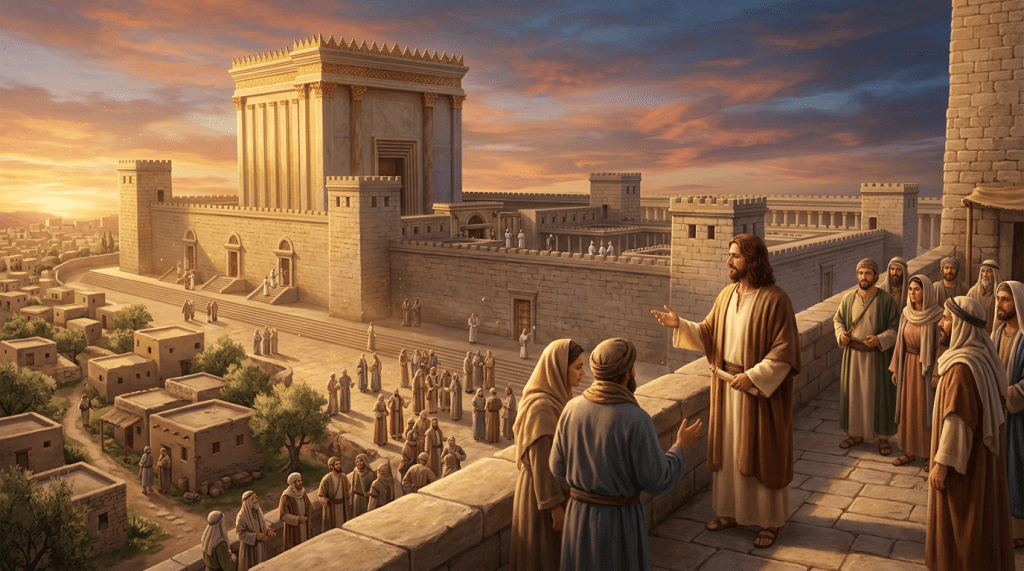
An article on Israel365 News highlights the importance of prophecy in the Jewish faith.
Israel365 is operated by Orthodox Jews and Adam Berkowitz wrote about three pronouncements recently made by Israel’s nascent Jewish Sanhedrin.
Though not recognized by all Orthodox Jews, the nascent (literally developing) Sanhedrin was set up in Israel in 2004 as a national rabbinical court of Jewish law.
One of its goals is to receive recognition by the Jewish government allowing it to become Israel’s official Sanhedrin and to be integrated into the country’s government and legal system.
Though this hasn’t happened yet, the nascent Sanhedrin released three pronouncements referred to as psaks.
According to Berkowitz, a psak is a “binding halachic ruling, and that, in matters concerning the fate of the Jewish people, a court above is bound to follow the ruling of a court below.”
In other words, they believe the pronouncement of a psak by the Sanhedrin (the lower court) must be obeyed by the Heavenly court. God must honor these psaks.
The Three Psaks
The first psak declared by the nascent Sanhedrin called for the removal of all of Israel’s enemies. The second asked for the Messiah to be revealed and the Jewish temple to be rebuilt.
But the third psak is what caught my attention as it called for a return of the spirit of prophecy in Israel.
Berkowitz writes that Orthodox Jews believe that the “spirit of prophecy” called the “ru’ach hakodesh (divine spirit)” left Israel after the destruction of the first Temple.
As Berkowitz explains:
The Mishnah in Sotah 9:12 lists prophecy among a series of losses tied to the destruction of the First Temple, alongside the Urim veTumim, the breastplate oracle the High Priest once used to receive divine answers, which the Talmud in Yoma 21b says never functioned the same way once the Second Temple stood.
This is tied to the disappearance of the Ark of the Covenant on which the very presence of God rested. It went missing after the first temple was destroyed by the Babylonians in 586 BC.
Though the Jewish temple was rebuilt about 70 years later, it never contained the Ark of the Covenant. The Divine Presence was no longer manifesting in Israel and along with this came the disappearance of prophecy.
But Orthodox Jews believe the spirit of prophecy will return with the arrival of the Messiah.
“The return of prophecy is treated in Jewish sources as one of the fixed markers of the messianic age,” Berkowitz wrote.
As proof, Berkowitz cited Joel 2:28, which reads, “And afterward, I will pour out my Spirit on all people. Your sons and daughters will prophesy, your old men will dream dreams, your young men will see visions.“
As Berkowitz explains, Orthodox Jews believe that the return of prophecy along with the rebuilding of the Jewish Temple are the key markers of the coming Messianic age.
He writes that the Jewish Mishnah “places the return of prophecy among the changes that arrive with the messianic era, alongside the rebuilding of the Temple and the ingathering of the exiles, treating it as a restoration of the conditions that made prophecy possible in the first place rather than a new gift.”
While the Jews are looking ahead for this to be fulfilled, Christians believe this already took place with the arrival of Jesus, the Jewish Messiah.
Jesus’ Body is God’s Temple on Earth
First, in John 2:18-21, Jesus declared that his body is God’s temple — a truth now expressed in the church, where God’s presence resides.
Jesus Is the Ark of the Covenant
Though the second temple did not contain the Ark of the Covenant, it returned with the arrival of Christ. On top of the Ark of the Covenant were two Cherubim and the very presence of God rested between these two angelic beings.
When Mary peered in the tomb after Christ’s resurrection, she saw a striking scene.
Two angels were sitting at the spot where Christ’s body used to lay. One sat at the head and the other at the feet (John 20:12). This was mimicking the Ark of the Covenant, with the presence of God, Jesus, between them.
The Church and Believers are the Temple
Thirdly, when the Holy Spirit fell on Day of Pentecost, and people poured in the streets of Jerusalem speaking in tongues, Peter turned to Joel 2 explaining the Holy Spirit would fall upon the earth when the Messiah showed up (Acts 2:17-18).
Believers were being filled with the Holy Spirit and were now the new temple (1 Corinthians 3:16).
The Spirit of Prophecy in the Church
Finally, prophecy plays a major role in the development of the church. It is listed as one of the five foundational ministries in Ephesians 4:11.
We also see prophets in action throughout the church. Prophecy warned of a coming famine (Acts 11:28) and was used to send out Paul and Barnabas on their first missionary journey (Acts 13:1-3).
Though there has been abuse, which God is cleaning up, I believe prophecy is still relevant today.



Leave a Reply