


Credit: Author LawrieM, Wikipedia, CC BY-SA 4.0
Have you heard about events in the Earth’s history like the “Chicxulub impact event” or the “Eltanin impact event”? Will Apophis strike the Earth in 2029 and end our civilization with another impact event? NASA scientists tell us that we will be safe, but we will see the object in the sky.
Have you heard of the Wormwood prophecies? There is a growing interest in large rocks that have struck the Earth, and other large rocks that might strike the Earth, possibly in our lifetime.
How large?
Some objects are wider than a large city, and they travel through space faster than a speeding bullet; much faster.
You know the expression, something is of ‘biblical proportions’? That’s what the world is beginning to talk about. Some objects in space have the power to change everything on the Earth if they collide with us.
“Chicxulub Impact” might be a challenge to pronounce, but it is the name for a huge asteroid that collided with the Earth. The remains of the impact crater are close to southern Mexico, which explains the name.
Shortly after the impact, some believe the dinosaurs disappeared. So, for the dinosaurs, Chicxulub was the end of the world.
Some people think we are next.
My personal favorite is the Eltanin event. Eltanin is the name of a research ship, and researchers on that ship discovered an impact crater on the bottom of the Pacific Ocean, near the southern tip of Chile, in South America, and not far from the Antarctic peninsula.
The discovery was recent, in 1981. The impact crater is larger than many countries, and we know that something really large, moving at an extremely high speed, struck the Earth in the Pacific Ocean.
- READ: Eltanin Impact: Wikipedia
Experts generally agree that all life on Earth changed, and the ancient ice ages started because of the impact.
That was a big rock.
Apophis is a much smaller rock, larger across than a football field, and it will come close to the Earth in 2029. According to the experts, we will be able to see it with our eyes, but it will only pass near us, and then it will continue its travels in space.
If Apophis does strike the Earth in 2029, the size and speed of that rock could cause an impact big enough to change human civilization, but it won’t be on the scale of Chicxulub or Eltanin.
So, what does all this mean to us? Should we change the way we experience life?
Here are some possibilities:
Science:
We all know who Charles Darwin is. His book “The Origin of the Species” gave us Biological Evolution and a universe without God. Now, many educated people are quiet about their belief in God, and many are Atheists. Science does have a philosophy.
Darwin’s model required a Uniformitarian world. That means conditions on Earth were always stable, and life evolved gradually, with no interventions.
Darwin’s Earth was like a sealed laboratory where life could emerge without God doing anything about it. The laws of probability require a world without interruptions, to evolve the complex life forms that we have today.
Now we have interruptions, and many scientists claim that Darwin’s model is becoming mathematically difficult, or even impossible. All this life around us, including us, could not emerge with all those catastrophes interrupting the process so dramatically.
Religion:
The Bible shows how people used to think about God, and how they practiced religion. Our ancestors looked up.
People also understood that life, as we know it, could change at any time, with no warning. If we named a philosophy, we used to believe in Catastrophism.
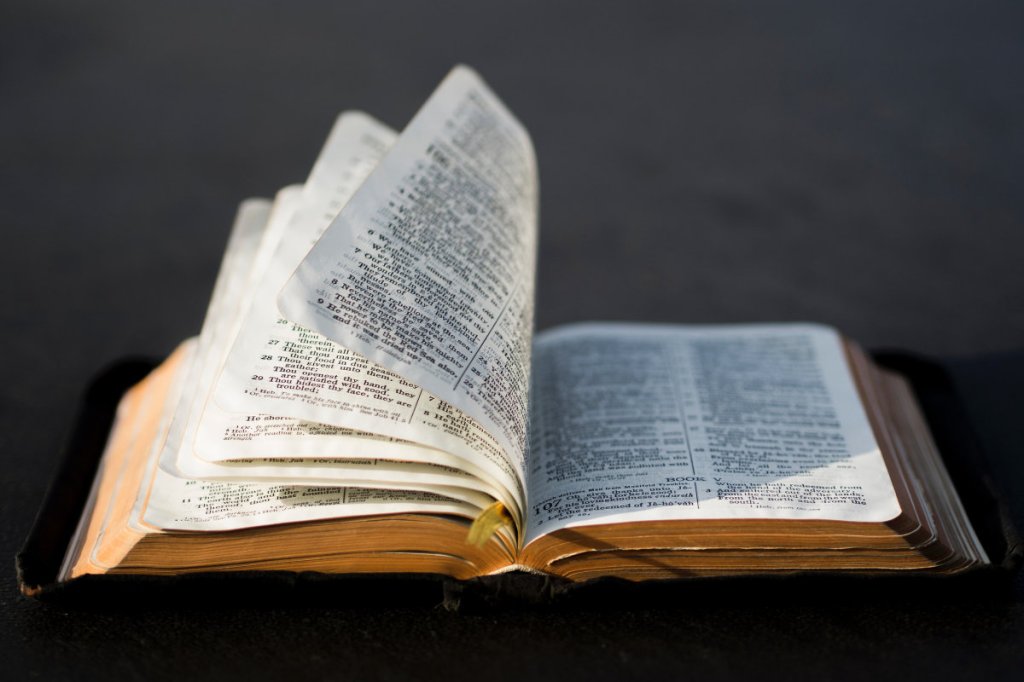
That is one definition of the Bible. It is a book filled with floods, wars, and interventions from God. In the Bible, Jesus gave us this warning:
“As were the days of Noah, so will be the coming of the Son of Man. For as in those days before the flood they were eating and drinking, marrying and giving in marriage, until the day when Noah entered the ark, and they were unaware until the flood came and swept them all away, so will be the coming of the Son of Man.” (Matthew 24:37-39)
We also have these words:
“Immediately after the distress of those days the sun will be darkened, and the moon will not give its light; the stars will fall from the sky, and the heavenly bodies will be shaken. At that time the sign of the Son of Man will appear in the sky, and all the nations of the earth will mourn. They will see the Son of Man coming on the clouds of the sky, with power and great glory.” (Matthew 24: 29 and 30)
I recommend reading Matthew chapter 24, in the Bible. There is a focus or philosophy in that chapter, that most of us have been missing.
Our Future:
The “United Nations Climate Change Conference” or COP28 just happened in Dubai. You have probably seen the news stories and the proposals to drastically change the way we live. I will skip the details here, but we are focusing our attention, and our worries, on the terrible catastrophes that might come on us. We are becoming a world of future-focused believers, or worriers.
That includes a growing interest in ancient catastrophes like Chicxulub and Eltanin, and worries about Apophis.
This is a huge change, for modern societies.
I think that some proposals for change are like the delusions of a religious cult, but behind the arguments is a lot of fretting and worrying.
Some people have warned us to wake up:

 OpentheWord.org
Leave a comment