


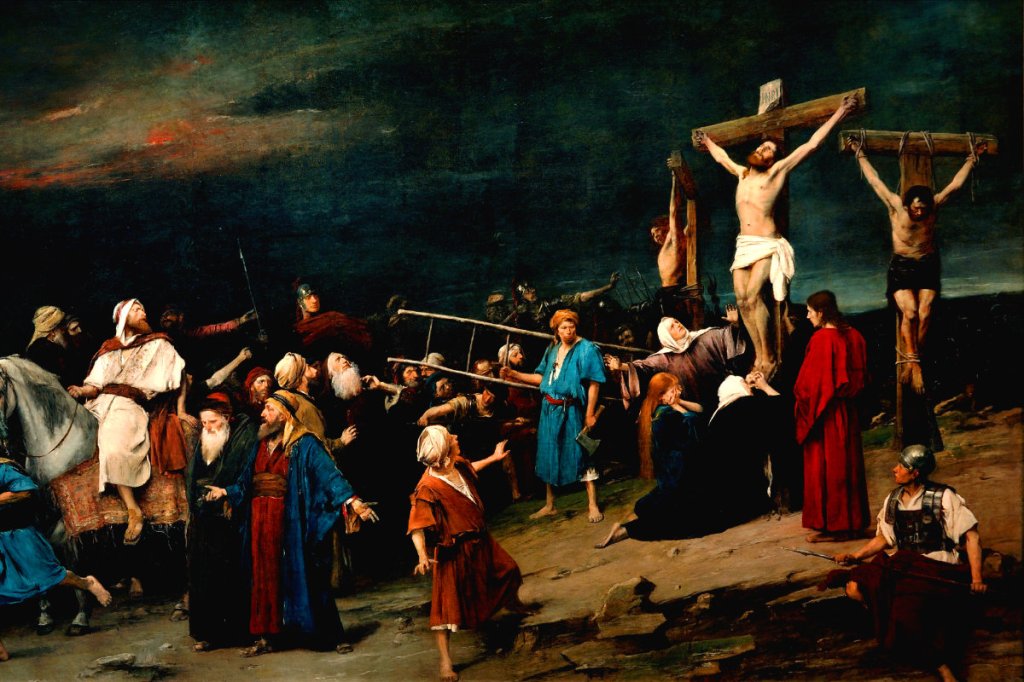
By John Everett Millais (1871), Wikpedia, Public Domain
Rabbi Pesach Wolicki had an interesting article on Israel365 News on where Moses was buried.
In the last chapter of Deuteronomy, the writer provides an unusual description of where Moses’ grave was located:
6 And He buried him in the valley in the land of Moab, opposite Beth-peor; but no one knows his burial place to this day. (Deuteronomy 34:4 NASV)
Rabbi Wolicki adds that though the Bible often talks about the burial sites of the patriarchs, it never provides the precise location as it did in the case of Moses.
Then the writer seems to almost mock people by suggesting, that though they know where Moses is buried, they will never find his grave. This would indicate that the grave itself was unmarked.
There was no gravestone, no monument, or no large stone marker indicating Moses’ burial site. If his body was put inside a cave or sepulcher as was common in those days, it was probably covered over, so no one could find it.
So why did God want Moses’ grave hidden?
Rabbi Wolicki explains it was to stop people from giving Moses a god-like status:
I’d like to suggest that it is due to Moses’ unique status that his grave needed to be concealed. The temptation to view Moses as a god-like figure was great. It was certainly tempting to see him as an intermediary who could intercede with God on our behalf. It is not difficult to imagine that had the location of Moses’ gravesite been known, it would certainly have become a pilgrimage site. People would flock there to pray… to Moses, instead of God.
By concealing Moses’ gravesite God sent us an important message. And by including the precise location of Moses’ in the verse, this lesson is made clear. The reason we can’t find Moses grave is that God has ordained that we will not find it, not because we don’t know where he was buried. To prove the point, the Bible tells us exactly where it is.
READ: Moses’ Hidden Grave
This tendency to treat people of faith as god-like can be seen in the Roman Catholic Church’s veneration of Mary, the mother of Jesus.
Though the Catholic Church does not consider her to be God, over the years they have given her many god-like attributes. This included leading a sinless life on earth, remaining a perpetual virgin, being assumed to heaven without dying and having the ability to answer people’s prayers. READ: Roman Catholic Doctrine: the veneration of Mary AND Why did Mary become so prominent in the Roman Catholic Church?

 OpentheWord.org
Leave a comment