
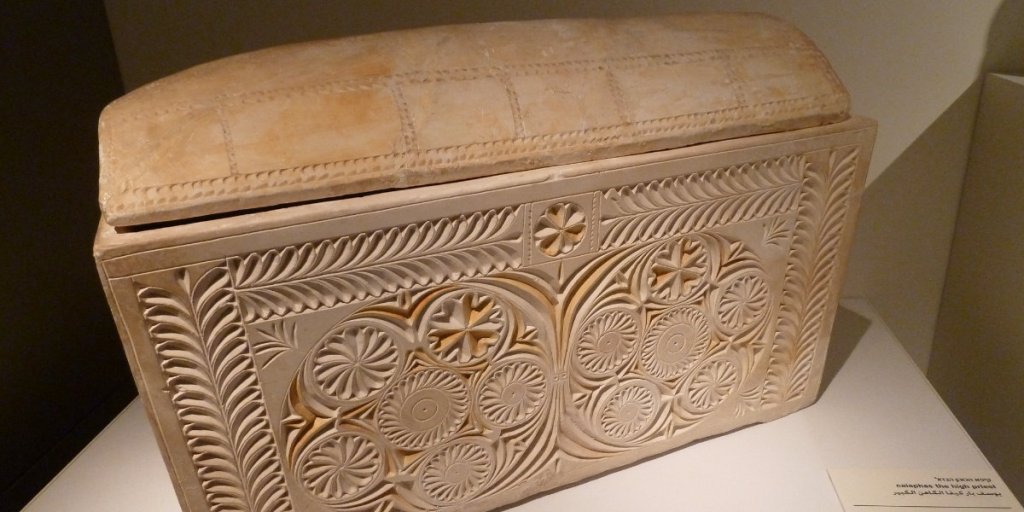
In 2011, the Israel Antiquities Authority (IAA) announced the discovery of an ossuary that confirmed the existence of one of the Gospel’s most infamous characters, Caiaphas the high priest, according to the Bible Archaeology Report
Caiaphas was the one who asked Pilate to execute Jesus.
An ossuary is a small limestone box used to store the bones of the deceased once the flesh had rotted away. It was common for bones of multiple individuals to be stored inside one box.
At times they inscribed the name(s) of the individuals on the outside of the ossuary. How rich and important you were also determined how elaborate the box would be.
According to the Gospels, Caiaphas was the high priest at the time Jesus was crucified. The plot to secretly arrest Christ during Passover was hatched in the courtyard at Caiaphas’ home (Matthew 26:3–5).
In that meeting they expressed fears about arresting Jesus publicly, since the crowd might riot, but finally agreed if it could be done secretly.
As High Priest, Caiaphas also presided over the Sanhedrin which was the Jewish religious court. After Jesus was arrested, the Lord was dragged before Caiaphas for a religious trial.
Caiaphas ordered that Jesus be sent to Pilate for execution after charging Christ with blasphemy, when He called Himself the Son of Man (Matthew 26:63–66).
According to the IAA, a woman’s ossuary dated to the first century was found in a burial cave in the valley of Elah. On the outside of the ossuary was etched the words, “Miriam Daughter of Yeshua Son of Caiaphas, Priests [of] Ma’aziah from Beth ’Imri.”
Not only did the inscription refer to a line of priests, but it specifically noted that she was the granddaughter of Caiaphas. It was an obvious attempt to connect her lineage to a famous ancestor, leading many to believe this was none other than Caiaphas of the gospels.
But this is not the only confirmation of Caiaphas, as High Priest.
A famous Jewish historian, Josephus, who died in 100 AD, wrote of a high priest named “Joseph, who was also called Caiaphas” in his book Antiquities of the Jews.
He added that Caiaphas was appointed High Priest in 18 AD by the Roman governor Valerius Gratus, who was succeeded as governor by Pontius Pilate.
But it is curious how Josephus noted Caiaphas went by both names — Joseph and Caiaphas.
Because this leads to a tomb discovered in 1990, which contained several ossuaries, but one was particularly ornate and contained the bones of six individuals, that ranged from a child under the age of five to a man in his sixties.
On the outside of the ossuary were inscribed the words, “Joseph son of Caiaphas.” However, some have pointed out it could also be rendered Joseph of the family of Caiaphas, which would fit with how Josephus described the High Priest’s name.
Some believe the bones of the older man are none other than those of the High Priest who requested the crucifixion of Christ.
Archaeology has once again, through both written record and physical evidence, confirmed the existence of another key person mentioned in the Bible.




Leave a Reply