
By Dr. Tamara Winslow
Defying Babylon
Nebuchadnezzar’s golden statue was impossible to ignore. Massive, commanding the attention of all who saw it, its mere size alone struck a awesome chord in the onlookers. No one dared to disobey the king’s command concerning it.
At a distance, three young Jewish princes stood, listening and waiting. The music would inevitably sound and then they would willfully violate the king’s decree. They knew the penalty that awaited them. No matter how awful the consequences they couldn’t bow to the image when the music sounded.
Their God, the God of Abraham, Isaac and Jacob forbade idolatrous worship. There was no exception to that law, even though it meant dying for their faith.
Nearby several more Babylonian officials also watched. Whoever didn’t bow to the image when the music played would be burnt alive in a blazing furnace, punishment for disobeying the decree.
Seconds later the swelling music of cornets, flutes, and harps along with various other instruments resounded throughout the area.
Prostrating themselves in worship, at the same time attempting to observe the actions of the Jews, the Chaldean officials noted that the Jewish men remained standing. It was settled. The three men must die!! They’d chosen to ignore the decree, unmoved by the visual challenge placed to remind them of Nebuchadnezzar’s name sake deity, Nebo, the Babylonian god of the arts, prophecy and music.
Word of their disobedience traveled quickly. Furious King Nebuchadnezzar confronted them but their response was unyielding. They would never bow to any image, even when sentenced to death.
The king’s face reddened with rage as he ordered the men to be cast into a furnace 7 times hotter than usual. Infuriated he wanted them dead in the most awful way. The intense burning fire was so severe that the men casting the bound Jews into the furnace perished. Yet as Nebuchadnezzar peered into the flames he saw four men, not three all walking around freely and unharmed in it’s midst.
This fourth person looked like God’s Son. Calling their names the king summoned the princes out of the fire. Nebuchadnezzar stood in awe. There wasn’t the slightest indication of a fiery affect upon them.
Amazed by the greatness of their God he overturned his conviction while at the same time honoring their God as the Most High. Refusing to bow down to the man-made artistic golden image these three men demonstrated that Christians don’t have to submit to worldly expressions of art. God protects those who determine to remain pure in vision, expression and imagery.
Worldly vs. Biblically Artistic Instruction
There is a shocking trend in Christian circles whereby artistic, creative believers pay more attention to the methods and forms of worldly artistic venture than Biblically-based artistic instruction. This hits close to my heart and causes me great concern.
Ever since I was very small I’ve been involved in one form of artistic expression or another. I’ve drawn and painted portraits, still life, landscapes, flowers, animals and more both professionally and semi-professionally using a variety of mediums.
In addition to this, God has allowed me to compose thousands of musical compositions many of which are unrecorded, but nonetheless archived in the Spirit for His Glory.
Consequently, for many years now, I’ve conducted and taught seminars on the Creative Arts for international students interested in all sorts of artistic expressions. Those particular seminars have always been thrilling.
However, I’m continually astounded when my students explain that the great majority of them never received solid Biblical training on what it means to be artistic. Furthermore, many have confessed to me that even in Christian training situations they were taught from an entirely secular and sometime “New Age” teaching base.
One student shared with me that while attending a 3- month Christian Arts course, she was encouraged to sit in the Hindu Lotus position to receive revelation for her artwork. She refused to do and was promptly rebuked, accused of being narrow-minded and one of “those Bible-believing Christians.”
Other Christian students with her, some from Buddhist and Hindu practicing countries, refused on the same grounds. Nonetheless the teachers scorned them. These things ought not to be.
God is Our Model for all Creativity
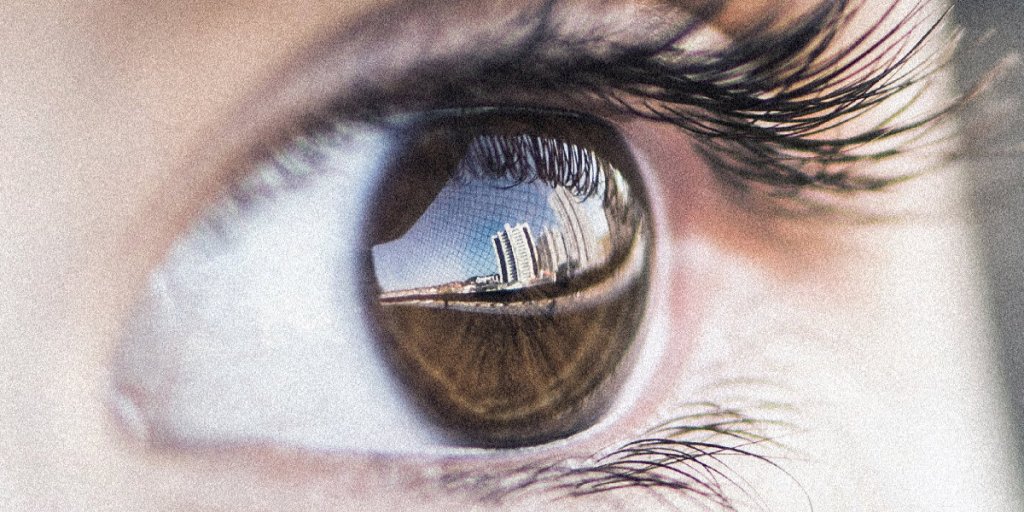
One of the most important and frequently overlooked factors in the development of creative art is visual influence. How we see determines how, what and why we create. God, the model for all creativity, artistic and otherwise, is Biblically illustrated.
Amazing practical truths and techniques are buried in the Biblical languages and examples. How He creates, fashions, paints, sculpts and more are there. But before any creative expression occurs there has to first be some type of “seeing”. This will be our emphasis.
Prior to and following each stage of creation God SAW!!! He recognized the potential needs and envisioned how creation should look and either spoke it with his mouth, painted or fashioned it with his fingers and hands. Then when He completed it He looked back and SAW it was good!
Right seeing produces righteous creation. He saw the value or goodness of what needed to be and what had been created. Proper seeing foundationally affects artistic development. One can’t be truly a spiritually-minded artistic Christian until one has developed in visual capacity and seen, or perceived, value. Seeing superficially doesn’t suffice. God’s model of seeing inspects, perceives, investigates and recognizes real conditions. He sees goodness or value and then demonstrates it.
One definition for the Hebrew word “Towb”, often translated as “good”, means rich or valuable in estimation. God understands and recognizes potential beauty and value and then creates it. Genesis 1:4 states that God saw the light and that it was good. This visual pattern continues on in Gen. 1:10, 12, 18, 21, 25 and 31.
Moody Christian Artists
I’ve dealt with the subject of the arts and creativity for many years and find it extremely disconcerting that many Christians express their artistic gifting through moodiness and up and down emotions. Historically, some of the worlds greatest artists were manic depressives or mentally ill.
Prior to his artistic success, the talented artist, Vincent van Gogh was a misunderstood and depressed Christian missionary. His life ended tragically in suicide after he’d desperately pursued ministry and failed condemned by his overseers.
He was foremost among the artists who pioneered an at that time controversial style of painting known as Expressionism developed after he’d been influenced by Neo-Impressionist artists. His philosophy of painting was based on how he saw things differently and his style reflected that.
Creative people may tend to vent their inventiveness through their emotions and often dark moods, rather than how God designed the New Birth life. When one doesn’t see one’s self rightly, one won’t also see what’s in the surrounding perspective.
Vision must be submitted to God’s character and what’s been accomplished in the New Birth or the artistic products of vision will be of an inferior spiritual quality. We can aim higher. Seeing good or finding the value to project a godly message expressed in an artistic manner can become the emphasis of why we create. Then the message is recognizable and spiritually clear.
I took a group of my art seminar students to a special exhibit at the Denver Colorado Art Museum several years ago. The students had spent 3 days of learning about this issue.
There was a certain painting by a well-known artist displayed in that exhibit. Viewing it without knowing its background it superficially seemed to portray a peaceful landscape, even though for reasons not displayed in the art, it projected depression.
Several of my students commented that they’d always liked the piece until they saw it through discerning eyes. A small descriptive plaque affixed besides the painting explained that the work had been painted just shortly before the artist killed himself. Suddenly everyone realized how significantly seeing plays an influential role in the production of art. It really made them think.
How One Sees
What and how one sees plays a huge role in what and how one creates. Ask yourself what types of eyes am I seeing with? How do I see? What godly and ungodly filters have affected my sight and consequently the message I’m endeavoring to project in my artwork? Do I tend to see the value or the worthlessness first? These are all questions we must ask ourselves if we’re to create in a spiritually-minded manner.
Prior to the fall of mankind, the serpent sought to ensnare and destroy God’s new creation. Adam had been strictly charged to protect the garden before Eve had been fashioned. He was to tend and keep.
According to the Hebrew word, “shamar”, keep means to “build a fence” or “hedge”. Seizing upon the affect of Eve’s second-hand information as to protect the garden, the serpent saw an opportunity.
Subtly, he enticed Eve to pick the forbidden fruit, while Adam stood, according to the literal Hebrew, right next to her elbow. The serpent promised that if they ate the fruit, she and her husband’s eyes would open and they’d know the difference between good and evil.
Doesn’t it seem odd that he’d promise this? Their spiritual eyes were already open. Which eyes was he referring to? It was their carnal eyes. Accordingly her demise began when she looked upon the fruit and saw it was good for food, pleasant to the eyes and able to make them wise.
She picked the fruit only after she’d seen its value, and then passed that perception on to Adam who also took and ate. Consequently, they recognized they were naked. No longer did they see themselves in God’s glorious perspective. Shamed and fearful, they cowered under the new, unfamiliar feelings that sin and death proffer. Value took a beating when they ate and until humankind was able to experience the New Creation recognizing value would never fully be the motive for anything. How must we then learn to see?
John the apostle wrote about this continuing dilemma in 1 John 2:15-17. Humankind’s eyes are subject to lusts and unholy desires all of which temporarily satisfy and foster a false sense of value.
At times, creative people unknowingly hope to gain value and worth through their artistic expressions. The world’s carnal, demonically-influenced system perverts godly eyes. It drives the carnal, un-renewed artist to look for whatever resembles worth eventually producing inferior creations void of truthful message.
Genuine value is absent when the vision distorts because worldly standards of value and methods of creativity supersede Spirit-led, Biblically-based truths. Only by learning to walk the disciplined daily Spirit-led journey, can one defeat this perversion.
The devout Christian must with unswerving dedication guard and keep their eye-gates clean, free to recognize real, valuable messages so that they can create artistically to God’s Glory. To do so, probing questions must be asked concerning what and how we see things. What is the value of this or that? What good does this or that thing possess? Is this worthy of producing an artistic representation?
Spiritual Eyes Affects Creativity
There are numerous Biblical examples of the power of positive and negative visual influence affecting creativity. We dare not just consider natural vision. That would only promote bondage and eventual carnality.
Modern Christian ministries are making serious attempts to impact the present visual generations. Some good fruit has been produced. But a question we may need to consider is: Are we perpetuating the emphasis on visual influences thereby reinforcing our problems with carnality that vehemently opposes spiritual mindedness? This question must be asked.
Can the naturally visual “believer” in this visually challenging world truly create without becoming dependant on external stimulus that pets the flesh and makes the soul feel good? We may be actually creating more problems for ourselves than we realize. The born again individual is a spiritual being first. Accordingly, our spiritual eyes need to be strengthened from God’s perspective.
The beautiful, artistic nature of both the tabernacle of Moses and Solomon’s temple stirred ancient worshipers to reverently seek God. The dramatic colors, imagery and structures were designed to exhibit His glory. How do we see or appreciate God today? We don’t always have grand structures, golden pillars and extravagant tapestries to look at. Do we focus on that declares His value to us and furthermore releases how we create artistic expressions in His name?
The spiritually-minded believer is on constant alert noting and observing God’s works in everyday life.
The unobservant becomes the ungrateful. Do you see or recognize what He’s done and the value of those deeds? What does it inspire? The carnal individual only considers externals. They live for the momentary feeling of satisfaction, and scorn the disciplined lifestyle necessary for a productive Christian expression life. What are you looking at? What do you focus on: spiritual or natural?
Some of the most powerful and Scriptural artistic examples demonstrate the negative side of visual influence. For example, when Ahaz saw the heathen altar of Damascus (2 Kings 16:10-12), he judged it significant enough to copy and use as his personal altar in Jerusalem.
The God-inspired original brazen altar set in place by Moses was replaced. Its revolting to consider that the Damascus altar was most probably originally designed for human sacrifice.
Still, seeing and copying this altar, in contrast to the one given by God in pattern to Moses, is uncomfortably similar to how Christians seek to mimic worldly and sometimes demonic expressions in music, dance and art in order to capture the interests of the unsaved and hold the attention of those superficially committed to God. Let’s examine how we establish value and in what ways we see it.
Carnality Defiles Artistic Expression
Ezekiel describes an example of hideous idolatrous worship that Aholibah (who represents the people of Jerusalem) demonstrated after she’d seen and allowed herself to dote upon the pictures of the Chaldean officers, brilliantly depicted upon the walls.
Imagining they Chaldeans would fulfill her feel, Aholibah, or God’s people, sought to unite with the very thing that was able to capture them. The demonically fascinating images inspired an adulterous expression of spiritual harlotry originating from a false sense of hopeful value resulting in abuse and pollution.
God’s people didn’t see true value. Consequently, they exchanged their faith and love for polluted corruption. Consider a variety of translations when you read Ezekiel 23:14-18.
Corrupted “seeing” has defiled artistic expression for thousands of years. Whatever is carnally seen and considered valuable is what can also be eventually idolized. There are many examples where this is present.
As Moses and Joshua led the Hebrew Children through the wilderness and into the Promised Land, God warned His people to destroy the pictures and idolatrous molten images lest the people come under the influence of the sight of them.(Num 33:51-53; Deut 7:25-26) Idols were considered cursed, not valued.
Yet, how often do we mimic what the world esteems and then chide anyone who calls those things abominable? The pure expressions of creativity have become muddled by what’s called tolerance and inclusion.
We must ask ourselves, “Does this thing I see have godly, unadulterated value?” Consider Aaron’s golden calf when the Hebrew children fell into a profane immoral demonstration of idolatry (Ex. 32:3-6).
We could also remember Moses’ bronze serpent, originally designed to produce healing. After several centuries, this emblem lost its earliest meaning and became the idolatrous Nehushtan. The people forgot its real purpose and worshiped it. (2 Kings. 18:3-4).
The examples never cease. In all cases, to restore genuine artistic expression, idols must be destroyed. Corrupt seeing produces profane and adulterous expressions.
The words and concepts for idolatry and adultery originate from the same Hebrew and Greek words. Furthermore, just as Aholibah became seduced by the paintings, Babylon, an ancient spiritual foe and power structure, still attempts to seduce God’s people with its pictures, its wine and its music.
John’s prophecy in Revelation states that a spiritual Babylon will reemerge in the Last days as a great harlot seducing God’s people with a prostitute’s Greek wine and sensory pleasant visual influences designed to capture the imaginations of God’s people and consequently the expressions that are intended to glorify God. How can we combat such a formidable and often accepted foe?
Avoiding the Seductions of Babylon as Affecting the Arts
Nebuchadnezzar’s name means “Nebo protects the boundaries”. This indicatively means that he was dedicated to the Babylonian deity. Nebo was a fire-god, worshipped by fire and one of the many gods in the Babylonian pantheon. He was considered the deity over the arts, prophecy and scribal arts.
Some scholars suggest that Nebuchadnezzar’s golden image was in actuality an image of Nebo in correlation to the death penalty by fire and that his worship was signaled by the use of music.
Just as in ancient times, artistic forms can be used seductively to draw people into false worship, so we can fall prey to the same is our visual focus is off. Furthermore, the Babylon of the End Times will attempt to seduce God’s people we need to understand how to avoid that.
Job 31:1 states that Job made a covenant, a promise with his eyes, understanding that when he looked at a maid, how he saw would determine what he thought or imagined of her.
Lust generally begins with the eyes. To avoid it one must set boundaries for what is seen and how one sees. Babylon seeks to capture how one sees.
Perhaps this is why the Psalmist writes so aptly in Ps. 34:8, O taste and see that the Lord is good. Christian artists must possess an experiential reality of tasting and seeing that God is good.
Nothing is more fulfilling or humbling as lying prostrate at His feet experientially tasting the goodness of His presence. Isn’t it odd that Babylon offers a wine, and entices God’s people to taste it, fully intending to capture and destroy the heart with false promises and superficial temporary experiences?
Our eyes must be disciplined and directed toward the type of spiritual mindedness that has been made available to us through the New Birth. The eyes must be trained to be aware of what could cause defilement. The Christian’s eyes must be single. (Matt 6:19-24)
Moreover, Jesus sternly warned in Matthew 5:27-30 about the consequences of immorality and improper seeing. Adultery or idolatry begins with improper seeing. Our eyes must be single or undivided in their attention.
Mammon, often thought to be the name of a Syrian deity, though not proven, is still representative of earthly wealth and values. An undecided heart is uncertain of what it values and worthy of sharing.
Genuine creativity requires single sight capable of focusing on God alone as Lord. Mammon, or anything of esteem or value that captures the attentions and divides our hearts against God breaks down that artistic nature. What or who do you value and why?
Our eyes can be like focused dove’s eyes spoken of in the intimate love song of Song of Solomon, tender, innocent and loyal. (Song 1:15) Considering this, our visual enemy is what the Bible calls the “evil eye.”
Evil Eye Attracts Darkness
The evil eye is mentioned frequently in both the Old and New Testament and is one that is socially, morally and conditionally bad or harmful. In most cases, it’s connected with how one sees someone of lesser degree than oneself, especially the poor or afflicted. It may also be linked with greed and hasty gain.
Once again, value is connected with sight. The eye is often associated with the heart. Therefore an evil eye will reflect a hardened, unfeeling and immoral condition. Godly creativity can’t thrive or exist in that type of environment. (Deut 15:7-11; 28:53-59; Prov 23:1-8; 28:22)
Therefore, in order to develop right sight, you must examine yourself to determine if the symptoms of an evil eye are dominating you.
The Old Testament references pertaining to an evil eye related the following things.
- The persons with an evil eye are frequently immoral.
- They demonstrate an unethical manner in attitudes and behaviors.
Proverbs clearly warns that an evil eye results in greediness for delicacies. Such persons manipulatively take advantage of other person’s wealth or success and yet they don’t realize the consequences for their behavior. Their hasty greed always results in poverty. Furthermore, they seldom consider the future and aren’t consequential in their thinking. (Prov 28:22)
The New Testament references pertaining to the evil eye reveal significant characteristics similar to the Old Testament but also unique to the New Testament.
An evil eye, according the Greek word, poneros, is one that is diseased morally, full of degeneracy, unethical and distorted by pain (Matt 6:21-34; 20:11-16; Mark 7:20-23; Luke 11:33-36)
Jesus addresses it on numerous occasions always relating it to a condition of the heart. In most cases, the person with an evil eye lacks focus.
These references also describe a variety of symptoms in relationship to the arts. The person with an evil eye always struggles with mixed priorities. Their value and belief system is confused and purposeless. This condition negatively influences how they see value and consequently how they create.
Likewise, darkness dominates the physical body, soul and spirit of the person with an evil eye. Darkness is almost always associated with disease, death and confusion. Darkness in the eyes attracts demonic influence and distorts creativity, even perverting it.
Finally, persons with an evil eye are constantly worried about daily problems and cares. They know no peace. As a result they have great difficulty getting spiritual revelation to jump start their creative juices.
Fear of the Lord
Considering all these things, Godly seeing originates with a correct understanding of the Fear of the Lord, seldom grasped by Christian and non-Christian alike. It’s either over- complicated or cloaked in spooky impractical terminology.
A very simple, cumulative definition for the fear of the Lord is this. The fear of the Lord is a conscious willful honor, awe or respect of God’s awesomeness and character that causes one to hesitate cautiously and restrain behavior to avoid harmful consequences and broken spiritual relationship often accompanied by feelings of inward trembling.
How we see is determined by what we fear or respect and value. The fear of the Lord disciplines the individual to choose to recognize what is good and evil or unworthy of further communication in a creative expression.
The Psalmist states that when the fear of the Lord is taught a person may grow to recognize good. However, if it’s absent, visual perception becomes wicked. Is there a fear of God before your eyes? (Ps 34:11-15; Rom 3:18)
The fear of the Lord causes one to live by a set of spiritual, Biblical and chosen boundaries for seeing. In order to overcome and correct an evil eye, the believer must choose to refuse to look upon anything lacking value or influenced by worthlessness.
The eyes that see and recognize Godly value worth hate anything to do with compromise or ungodly forms of creativity. They make a willful decision to refuse the things that are contrary to the Word and character of God. (Ps 101:3)
A choice must be made. I will not purposely set anything worthless or vile before my eyes.
A choice must be made in order to recognize what is worthy of our attentions and creative investment. Worthlessness kills creativity. It must be willfully turned away. Shut your eyes to the things that you know will seduce you. Choose to look for real value.
The modern visual seductions accessible and capable of causing the most dedicated saint to fall bring temptations from every direction. When we choose to set vain, worthless things before our eyes, after knowing that there is worthlessness in them, and then decide to open our visual gates to these contrary attractions, we welcome defilement often excusing it as entertainment, education or being informed.
Accidentally stumbling upon visual pollution is unavoidable. Allow yourself to become disgusted with what’s disgusting. We don’t have to be victims but we also mustn’t be simple. (Ps 119:37; Prov 6:25; Isa 33:15-16; James 1:13-15)
Enlightened Eyes
Possessing their promised land, Moses warned the Hebrew children that when they didn’t drive out the land’s inhabitants the remaining residents would become pricks in their eyes and vex them continually. (Num 33:55-56)
Legally and spiritually speaking, a Christian has been delivered from the authority, (Greek word- exousia), of Satan. Consequently, all saints have been seated authoritatively above his cohorts. These demonic harassers act as the trespassing enemies residing in a land of renewed spiritual life belonging to all believers.
Christians are much like the Hebrew Children. We’re commanded to go in and possess our spiritual heritage because Jesus has already, legally defeated Satan’s kingdom when He died on the Cross and triumphed victoriously through His resurrection.
The daily spiritual journeys believers must employ involve owning the truths of the New Creation realities as detailed in Ephesians 3-5 and Colossians 2-3. The believer, a child of God, must then learn to imitate by putting off of the old nature and taking dominion over the ancient foe, the Devil.
Failure to drive out the adversaries creates a thorny-induced blindness disabling the saint from recognizing real value. The cares of this world, the deceitfulness of riches and the lust of other things quickly overwhelm the believer and restrain the development of our artistic abilities. (Deut 1:8; 2:24-25)
In the Garden of Eden, God commanded mankind to tend and keep the garden. Similarly the Hebrew Children were commanded to “take heed” or “shamar”, protect their souls lest they forget the things their eyes had seen and fall into idolatry.
This means one has to build protective boundaries designed to keep the enemy out of our vision. We don’t have to isolate or cut ourselves off from the world. But we must willfully choose to protect our eyes lest we forget our God! (Gen. 2:15-17; Deut 4:9-11)
If we long to see the release of the recognition valuable creativity we must pray for one another diligently. Paul prayed that the eyes of the understanding of the Ephesian believers would be enlightened. Jesus came to open blinded eyes. I admonish you to pray for one another to see righteously. A blind Church is a Church without creativity. Artistic creativity begins by recognizing value according to God’s standards for goodness.
. . . . . . . . . . . . . . . . . . . . . . . . . . .
Dr. Tamara Winslow has been in the ministry since 1977 as an international minister and is the founder/director of the Institutes for Biblical Truth based in Colorado Springs, CO, USA. (http://www.tamarawinslow.com ). She is a published author, an accomplished pianist, a composer of more than 7,000 songs and has recorded several original CD’s which have been released internationally.




Leave a Reply