
A few months ago, my wife met with a few women from the church we attend. This took place after the death of Charlie Kirk.
As they enjoyed a time of fellowship, there had been no mention of politics.
But then one lady started talking about Charlie Kirk. She described Kirk and others linked with him as racists and misogynists. She is a genuine believer actively involved in the church.
On the other hand, I have seen believers refer to Charlie Kirk as a Christian martyr.
Obviously, both can’t be true.
I know of Christians who genuinely believe US President Donald Trump is the Antichrist. They even point to the attempted assassination of Trump, where he was hit in the ear, as evidence. They compare this to Revelation’s description of the Antichrist surviving a head wound (Revelation 13:3-4).
On the other extreme I have seen articles comparing Trump to the Persian King Cyrus, who God called His Servant.
Obviously, Trump can’t be both.
But these contradictory opinions are in our church.
In a recent op-ed for the Christian Post, Mark Creech described a sad situation where politics reared its head ending a long standing Christian friendship:
Recently, a man informed a friend of mine — by text message — that he could no longer maintain a friendship with him because of his “Republican values,” which he described as “ungodly.” He insisted he bore no hatred, yet declared the relationship effectively over. In just a few lines on a phone screen, a friendship ended. It was heartbreaking, but something increasingly common. It also reveals the real nature of our national divide.
Politics is divisive and its tentacles are infiltrating the church.
So how do we deal with this?
As Jesus gathered His disciples, the Lord faced a very similar problem.
Within Christ’s group of 12, there were men who were on the opposite extremes of the political spectrum of that day.
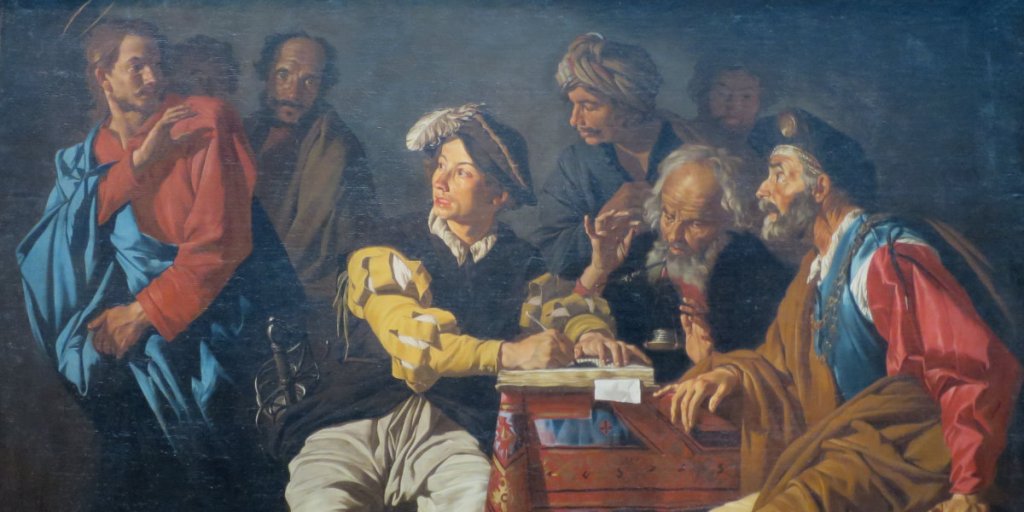
On one hand he had Matthew who worked as a Roman tax collector. He was probably even from the priestly tribe of Levi (Mark 2:14 and Matthew 9:9).
As a Jewish tax collector, Matthew would have also been considered a traitor because he had sold out to the Romans. He would have been despised. Some even considered it a sin to be found in their presence (Matthew 9:10-11).
He was also wealthy because of illicit money he made through collecting taxes. This was demonstrated through a huge banquet, Matthew put on to celebrate his decision leave his job and follow Christ (Luke 5:29).
But within Jesus’ band of disciples, there was another man who was on the opposite side of the political spectrum, Simon the Zealot (Mark 3:18).
For lack of a better description, from Rome’s perspective Zealots were terrorists. Meanwhile many Jews considered them freedom fighters, because they were a political movement dedicated to throwing off the Roman yoke.
It was the Zealots who led the rebellion that successfully drove the Romans out of Jerusalem in 66 AD. The Romans counter attacked in 70 AD sacking Jerusalem and destroying the Jewish Temple.
Like many political movements, the Zealots had extremists who justified violence to achieve their goals.
Within the Zealots, there were the Sicarii, a group of assassins. They carried daggers called sicae hidden in their cloaks, They would infiltrate large crowds to murder Romans and particularly Jewish sympathizers, and then quickly fade away in the crowd to escape.
Matthew would have been a legitimate target.
We have no way of knowing if Simon was part of the Sicarii, but as a Zealot, he would probably sympathized with them. Like many of the other disciples, he would have despised Matthew.
We need to understand that Jesus, with His heavenly Father’s guidance, had purposefully chosen these men. The Lord knew exactly what He was doing.
The Lord was also fully aware of the political tensions that this bringing together would create.
The disciples were not born with halos over their heads as many medieval paintings portrayed them. They were flesh and blood like the rest of us.
I can’t believe for one moment that there had not been a few heated discussions and even snide remarks between the disciples in the early days.
Curiously, I think we even see hints of this political tension in the Gospels.
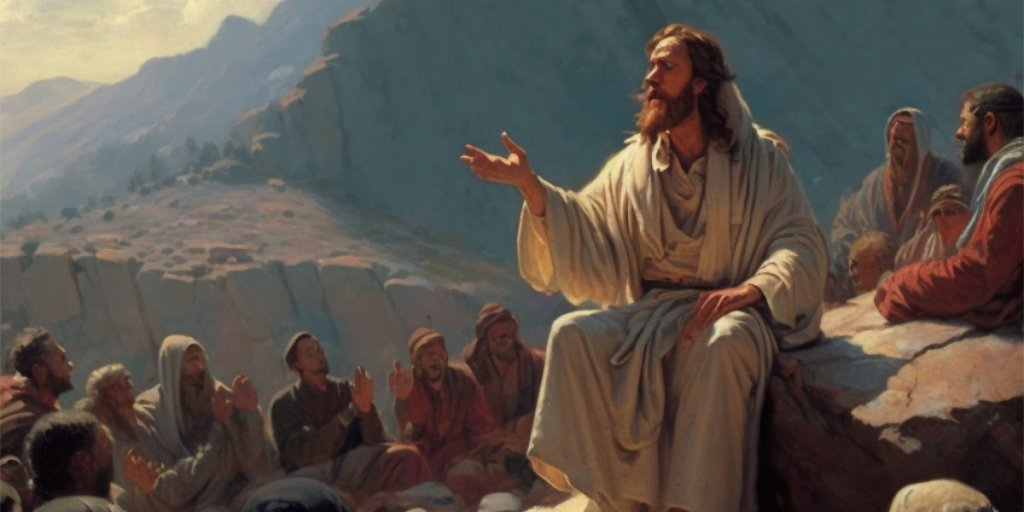
At the beginning of His ministry. the Lord talked a lot about the need to forgive others (Matthew 6:14). He told people to love their enemies and to even pray for those who persecuted or took advantage of them (Matthew 5:44).
Jesus did this purposefully. These words were directed as much to His own disciples, as they were to the small crowds gathering to listen to Christ during those formative days
In order, for this group of 12 disciples to survive and change the world, they had to first forgive each other and then purposely set aside their political beliefs.
The Kingdom of God had to be more important than political kingdoms.


 OpentheWord.org
Leave a comment