
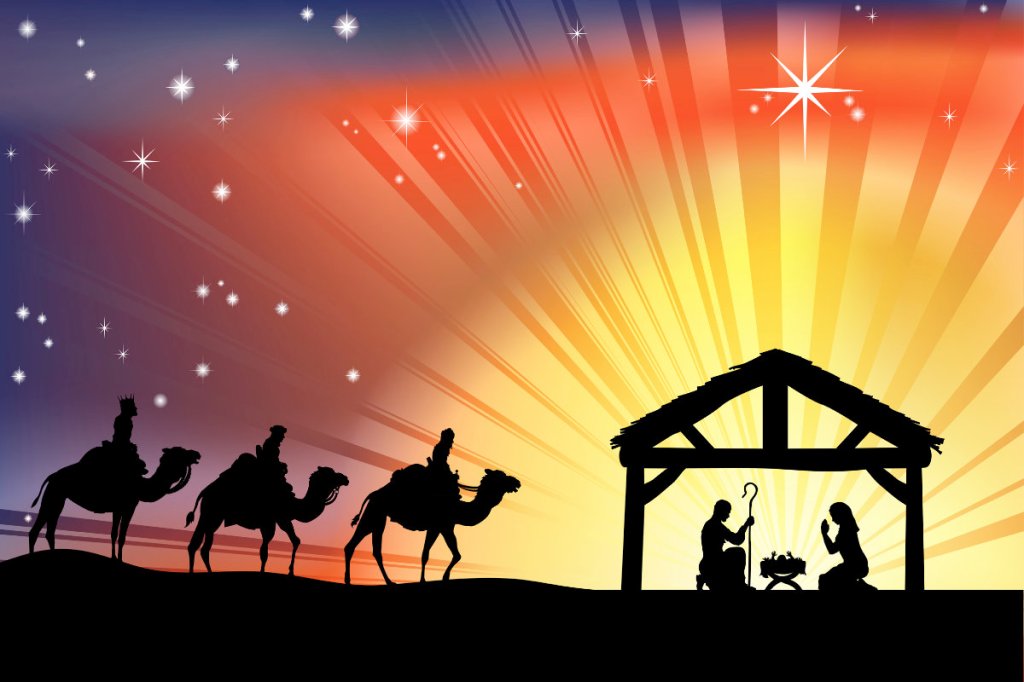
Just before Christ’s birth, Joseph and Mary were required to go to Bethlehem to register for a census.
Now Joseph also went up from Galilee, from the city of Nazareth, to Judea, to the city of David which is called Bethlehem, because he was of the house and family of David, 5 in order to register along with Mary, who was betrothed to him, and was pregnant. (Luke 2:4-5 NASV)
While there Mary gave birth to Jesus. This fulfilled Micah’s prophecy that the future ruler of Israel would be born in Bethlehem (Micah 5:2).
But with Joseph and Mary living in Nazareth some have questioned why they needed to return to Bethlehem for the census. This was normally not required.
In an article posted on the Associates for Bible Research website, Bryan Windle points to the discovery of an ancient papyrus which provides the one exception requiring people to return.
Known as Papyrus 904, it is located in London’s British Museum. In the document, Prefect Gaius Vibius Maximus provides the details of a census that would take place in the Roman province of Egypt in 104 AD:
Gaius Vibius Maximus, prefect of Egypt [says]: Seeing that the time has come for the house-to-house census, it is necessary to compel those who for any cause whatsoever are residing out of their homes (or districts) to return to their own homes, that they may both carry out the regular order of the census, and may also attend diligently to the cultivation of their allotments.
The edict by Gaius Vibius Maximus specifically states that even if they were living elsewhere, any individual who still owned property in their home town had to return home for the census. Windle also points out that both Luke and Maximus use the exact same Greek word for census, apographe.
The fact, that Joseph returned to Bethlehem indicated that he either owned property there or was in line to inherit.
Secondly, while most retellings of the Christmas story state that Mary and Joseph tried to find room in an inn, this may not have been the case.
Luke uses the Greek word kataluma, which can also be translated as guest chamber or guest room (Luke 2:7).
He uses the same word to describe the upper room in Luke 22:11. This is where Jesus and the disciples met for their final supper and where the Holy Spirit fell. This was not a room in an inn, but rather a guest room in a house.
Most homes of that time had an extra room where friends and family could stay while travelling.
So it seems that Joseph may have wanted to stay in the very house where he was born, which he either partially owned or was set to inherit.
The fact, the guest room was already in use indicated that other family members or friends were also in Bethlehem for the census.
Other factors may have been at play here as well. It was common practice for women to give birth in the stable, because the birthing process would have made the home unclean.
It’s also possible that Joseph owned other property, which he was unable to access at that time. Perhaps, it had been rented out. If that was the case, they were probably trying to stay in the home of a relative.
Whatever the case, Joseph and Mary continued to live in Bethlehem after the birth of Jesus. So Joseph obviously had a house there.
They fled to Egypt after Joseph was warned in a dream to leave (Matthew 2:13), because of Herod’s plan to kill the children in Bethlehem (Matthew 2:16-18).
When they returned from Egypt, Joseph decided to move to Nazareth where they previously lived (Luke 2:4), instead of Bethlehem. This was because of recent political developments (Matthew 2:22-23) .
While Mary was a major part of the Christmas story, it’s obvious that Joseph played a vital role as well.

 OpentheWord.org
Leave a comment