

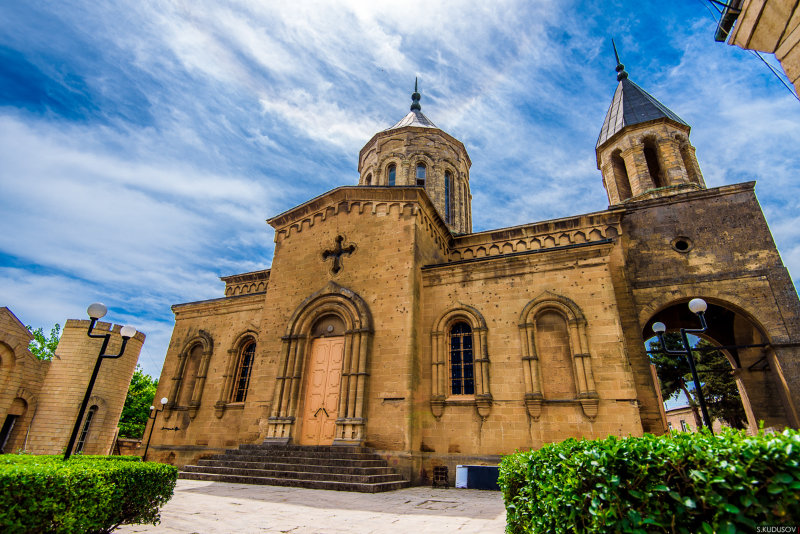
Credit: Сулим Кудусов, Wikipedia, CC BY-SA 3.0
If you had a map of the world, possibly a globe, could you find Dagestan?
Here’s how to find it on a map: Find Russia, on the European side, south of Moscow. Now find that large body of water, the Caspian Sea, between southern Russia and Iran. Dagestan is on the north-west shore of the Caspian Sea.
If you missed the news, some violent people, now considered “terrorists” attacked two Jewish synagogues, and at least one Russian Orthodox Church, in Dagestan. Many people were killed and injured, and at least one Orthodox priest was shot. Apparently, the attackers were Muslims, and they were angry about something.
I have never visited that region, but Dagestan is a Republic within Russia. The majority of residents identify as Muslim, but there is an old and historical Jewish community, and Russia controls the region, so there are some Russian Orthodox believers. I have also heard that there is, or was, a very active Christian Pentecostal church in the capital city, but I don’t know how the group fits into the news story.
So, how can we understand stories like this, about religious violence? Could something like this happen to us? Could there be a civil war in southern Russia?
One possibility is to consult an Atheist. Possibly the most famous Atheist in the world, or the person most famous for being an Atheist, is Richard Dawkins, who lives in England. He is not happy that English Christian traditions are being replaced, in some places, by Muslim traditions, among immigrants.
It seems strange that the man who calls God a delusion also identifies as a Christian, but he really does. He calls himself a “Cultural Christian” and I think he is correct.
I am writing as a Christian, and I do not recommend becoming an Atheist, but there are things we can learn.
Every religion has a culture, and that is tied to the “Founder Myth.” The word “myth” usually means a story that is not true, but there is an older meaning, which refers to the stories of our origins. Those stories may be like fairy tales, but some are true historical accounts.
Let’s use the old definition.
The founder is whoever started the religion; Moses, Buddha, Jesus, Mohamed, and there are many more names. The lifestyle of the founder dominates the culture, even if the “believers” don’t believe as much as they act out the culture. That explains how a famous Atheist, who denies the existence of God, can be a cultural Christian.
That might also explain the actions of the terrorists in Dagestan. The founder of Islam, Mohamed, was a religious teacher who formed an army in the Arabian deserts and spread his religion by military conquest. That is history, but it can also be part of a modern cultural religion.
People can act out the old stories, and that can explain some religious violence.
In places where Jesus dominates the culture, there is approval for teaching and healing. Many of the old hospitals and schools, where I live, have historical religious names. In the Bible, there is no story of Jesus forming an army to conquer the world, to spread God’s truth.
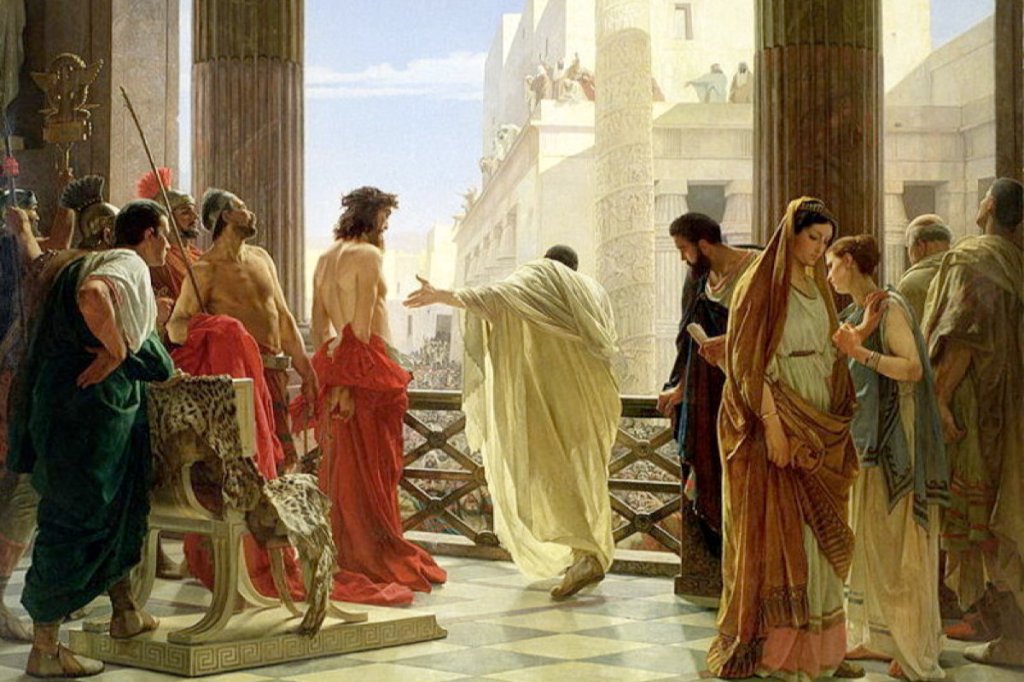
The founder of Christianity, Jesus, identified cultural religion, and strongly disagreed. He talked about religious teachers who …
Sit on Moses’ seat, so do and observe whatever they tell you, but not the works they do. For they preach, but do not practice. They tie up heavy burdens, hard to bear and lay them on people’s shoulders, but they themselves are not willing to move them with their finger. They do all their deeds to be seen by others.
(Matthew 34: 2 to 5)
Religion, as a cultural driver, can take us to some interesting places. Imagine a dedicated Atheist who really enjoys Christmas carols and old hymns. Or, follow the news from places like Dagestan.
I hope we all find the simple truth. In all the cultural noise, there is a “Greatest Commandment”:
‘Love the Lord your God with all your heart, with all your soul, and with all your mind.’ This is the first and greatest commandment. The second is like it: ‘Love your neighbor as yourself.’ All the law and the prophets depend on these two commandments.
(Matthew 22: 37 to 40)



 OpentheWord.org
Leave a comment