

Credit: Wikimedia, Public Domain
As we study the life of Christ in the Gospels, people often wonder if there are any historical references to Christ from this time outside the Bible.
And most certainly there are, and some of the more interesting ones are made by secularists and in some instances by those who opposed and mocked Christianity. Because in doing so, they confirm many of the basic tenets of the Christian faith.
![Graffiti on a Roman wall dated to the first century. It depicts a man worshipping a crucified donkey. The words read "Alexamenos worships [his] god." It is believed Roman soldiers were mocking a Christian solder. Wikipedia](https://opentheword.org/wp-content/uploads/2013/11/jesus-wall-graffiti-rome-crucified-donkey.jpg?w=266)
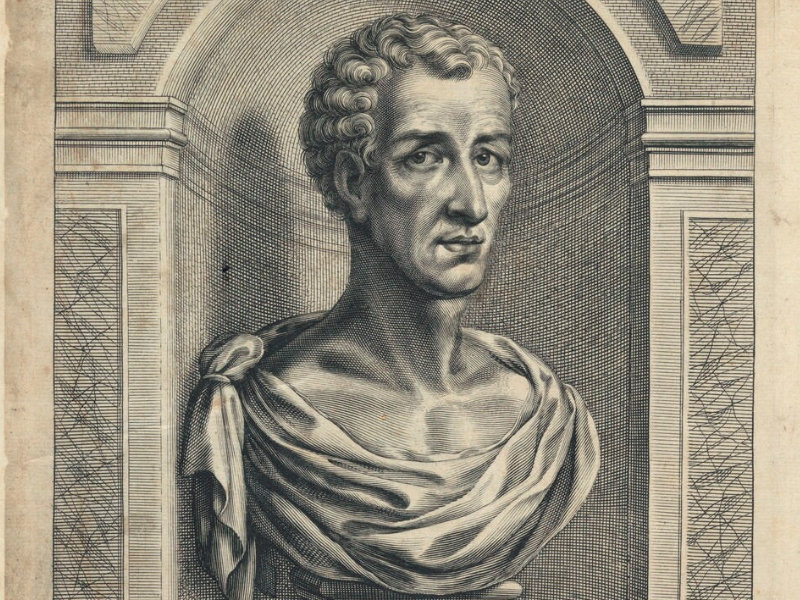
Take a statement made by a famous Greek speaker, writer, and satirist Lucian of Samosata, who lived between 125 AD and 180 AD.
He was renowned for mocking religion, and his writings were very popular among the ancient Greeks.
And it seems Christianity was not beyond a jibe or two. In his book, The Death of Peregrine, he mockingly refers to Christians, and in the process establishes several historical facts and truths about the Christian faith.
Samosata provides this interesting description:
“The Christians, you know, worship a man to this day,–the distinguished personage who introduced their novel rites, and was crucified on that account…. You see, these misguided creatures start with the general conviction that they are immortal for all time, which explains the contempt of death and voluntary self-devotion which are so common among them; and then it was impressed on them by their original lawgiver that they are all brothers, from the moment that they are converted, and deny the gods of Greece, and worship the crucified sage, and live after his laws.”18 .
Without mentioning the name of Christ, he confirms several facts about the Christian faith:
- First, that Christians worshiped a man, who they considered to be God (John 1:1),
- That this unnamed man, Jesus, was the founder of their faith (Acts 11:26),
- This man, whom they worshiped, had been crucified by the Romans (1 Corinthians 2:1-2),
- Samosata may have been indirectly referring to water baptism (Matthew 28:19) and communion (Mark 14:22-25) when he talked about Christian’s ‘novel rites,’
- Christians believed in life after death, which Samosata said is the reason they did not fear death when they were persecuted (1 Corinthians 15:55-57).
- They rejected the Greek gods and idol worship (1 Corinthians 10:7-22),
- He indirectly referred to the born-again experience stating that Christians went through an instantaneous conversion experience (John 3:1-3), and
- After this conversion, Christians believed they were now all brothers because of this common faith, confirming what Jesus said that we have all become children of God (John 1:12).
By mockingly referring to them as misguided, Samosata was in no way doing this as one who supported and promoted the Christian faith.



 OpentheWord.org
Leave a comment