
So, what is your religion? Is there a community or a team in this world, that you belong to? That could be a religion or a belief system, including Atheism. Most people in the world identify with some belief community.
If you search something like “world religion statistics” on the Internet, you will find numbers like this:
Christians: 32 percent, about 2.3 billion
Muslims: 25.6 percent, about 2 billion
Unaffiliated (no religion): 24.2 percent, about 1.9 billion
Hindus: 14.9 percent, about 1.2 billion
Buddhists: 4.1 percent, about 300 million
Jews: 0.2 percent, about 10 to 15 million
Other Religions: 2.2 percent, about 200 million
I will trust the experts to determine how accurate those numbers are, but this is a picture of our world. Also, I think most of those statistics stem from the family that we are born into.
Apparently, there is a tradition, among Muslims, that a father speaks some important religious words into the face of a new baby, and that person is a Muslim, for life.
We also know that many Christian groups baptize tiny babies, and that is considered to be the time when that person becomes a Christian.
There are arguments about these practices and I am not trying to start an argument here, I’m just saying, that’s what people do. That is the world that we live in.
In the United States, there is an administrative problem about religious affiliation. This is a mostly a problem for the DOD, the military Department of Defence. You probably know that the military, in all branches, has Chaplains. I knew a minister, many years ago, who decided to become a Prison Chaplain. He resigned from his church, and started working as a Prison Guard. I think he eventually qualified as a Prison Chaplain.
The administrative problem for governments, is who gets to be a Chaplain, and receive a salary from tax-payer money. The list of approved religions, for the U.S. DOD has changed, with changes in population statistics.
Someone must decide what communities are large enough to have Chaplains who preach their message, and those Chaplains receive a salary with benefits. In the military, they also receive a rank as an officer.
If you want to know more:
READ: DOD Officially Drops 180 Faiths From Military’s Recognized Religion List
There is one big problem, with this statistical problem: Who and what are we, you and me, and when do we decide for ourselves? In popular culture, everywhere in the world, we each “believe” and follow what we are told.
For some people, there is no choice. In parts of the world, a person who decides to change and believe something else can be killed, or at least die mysteriously. In those places, the police don’t like to investigate, or at least that’s I what I have been told.
But let’s leave that story for another time. It is simply true that the life choices that you want to make, contrasted with what and who you are told to be, is a huge and mostly invisible problem.
So, who do you want to be?
There is an old story, in the Bible, told by Jesus, who liked to teach lessons with stories. Actually, there are two stories together that make the same point. Those stories tell us about who we choose to be. It’s always a personal decision.
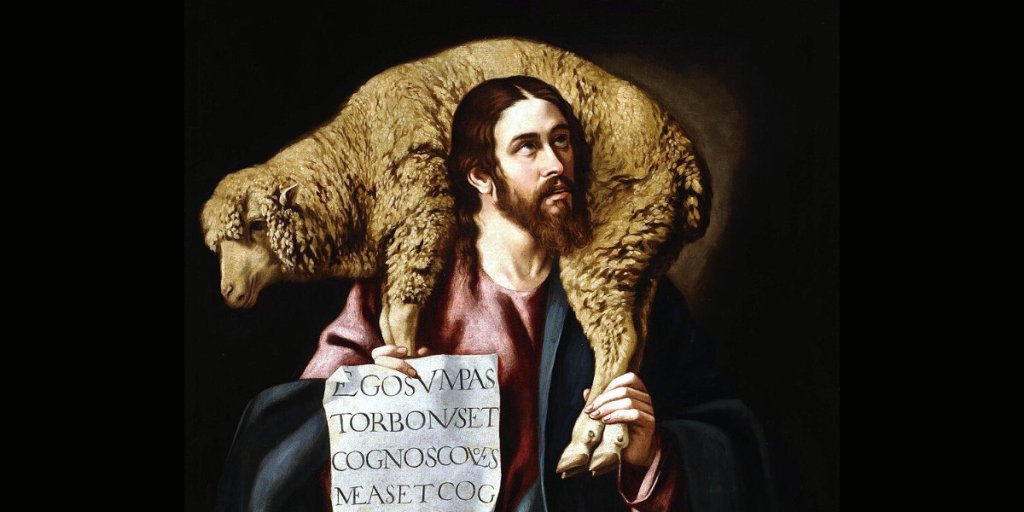
The first story is about a shepherd who lost one sheep, but he still had ninety nine others. That shepherd put the ninety nine sheep in a safe place, and then risked his life to find the one sheep that was lost, and he was very happy, when he found it. You can find that story in the book of Luke, in chapter 15, verses one to seven.
You might know, you can also find that story in an old song. I remember it from when I was a boy. I like this video version because only one person sings it, and that fits with the theme:
That sheep story is followed by another one. Apparently this question about who we each are was an important point that had to be emphasized:
What woman, having ten silver coins, if she loses one coin, does not light a lamp and sweep the house and seek diligently until she finds it? And when she has found it, she calls together her friends and neighbors, saying, ‘Rejoice with me, for I have found the coin that I had lost.’ Just so, I tell you, there is joy before the angels of God over one sinner who repents. (Luke 15: 8 to 10)
Those two stories are followed by a third one, about one son who was lost from his father. We call that the story of the “Prodigal Son.” All three of these stories about being personally found, are together, as if this is a point that needs to be emphasized.
So, who we are is more than a personal choice. Jesus told us about one God and one lost person [sheep / coin / son]. The decision to find us does not come only from us. God finds us, and we can choose to agree with that one who rescues us.
We are told that someone is looking for each of us, you and me. Our decision is only to let that one God rescue this one person. That is a complete contradiction of human culture, where each of us is told what community we belong to, and what we “believe.”
A “religion” or community that we might join after is a support group filled with other people who have made that personal change.
This is a lesson worth learning:







Leave a Reply