
The Babylonian Talmud is over 30 volumes in size. It is a compilation of Jewish oral traditions and Old Testament commentaries passed down by the orthodox Jews over the past 2,500 years. It is the primary source of Jewish theology and interpretation of the law.
In one passage, it actually refers to the crucifixion of Christ, stating:
On the eve of the Passover Yeshu was hanged. For forty days before the execution took place, a herald went forth and cried, “He is going forth to be stoned because he has practised sorcery and enticed Israel to apostasy. Anyone who can say anything in his favour, let him come forward and plead on his behalf.” But since nothing was brought forward in his favour he was hanged on the eve of the Passover. — Sanhedrin 43a, Babylonian Talmud (Soncino Edition)
Despite a handful of dissenters, most scholars believe Yeshu is simply a shortened version of Yeshua, the Hebrew name for Jesus. His execution on the eve of the Passover, also fits perfectly with Christ’s crucifixion. In fact other English versions of the Babylonian Talmud translate Yeshu as simply Jesus Christ.
So why did the Talmud use the word hanged to describe Christ’s crucifixion? It did so because Deuteronomy 21:22-23 says a curse was put on anyone who was hanged on a tree.
“Now if a person has committed a sin carrying a sentence of death and he is put to death, and you hang him on a tree,… (for he who is hanged is cursed of God).
By using this specific word, the Talmud was stating that God had cursed Jesus through this method of execution.
Luke also used the word hanging to describe the crucifixion in chapter 23:39 and curiously, so did the Apostle Paul. But he adds in Galatians 3:13, that the curse connected with hanging on a tree became a blessing.
Since Jesus was crucified, the Lord’s death broke the curses associated with the law.
The Talmud then gave two reasons as to why Jesus was executed, sorcery and enticing people into apostasy.
This fits the Biblical narrative.
First, the pharisees tried to discredit Christ by suggesting He was casting out demons through a more powerful satanic being called Beelzebub in Matthew 9:34. In doing so, they essentially accused Jesus of sorcery.
Secondly, Matthew adds that the Jewish leaders arrested Jesus while He was alone in the garden with His disciples. This was over fears a public arrest would cause a riot because of Christ’s growing popularity (Matthew 26:3-5).
But the Talmud adds an interesting twist to the crucifixion story. It stated that 40 days before Christ’s crucifixion, people were asked to give reasons on why Jesus should be spared execution. None came to Christ’s defense.
While this is not mentioned in the Bible, we see something similar taking place at Christ’s crucifixion.
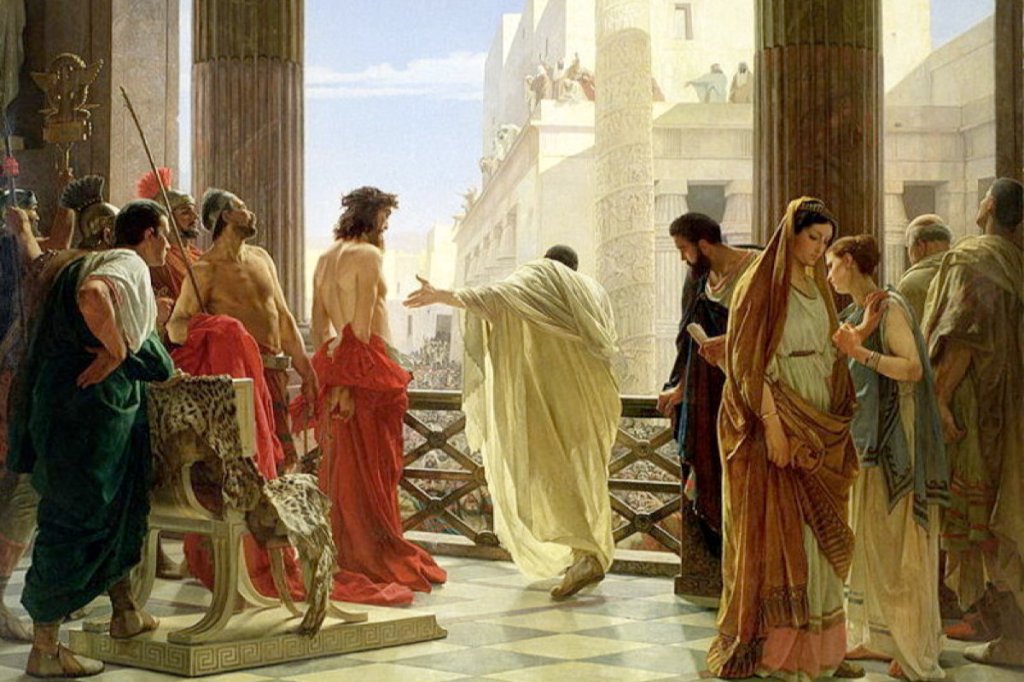
Matthew explains that as part of the Passover celebration, the Roman governor traditionally released one Jewish prisoner (Matthew 27:15).
Realizing Jesus was innocent of any crimes worthy of execution, Pontius Pilate offered to release either Jesus the Messiah or a known criminal Jesus Barabbas.
Influenced by the chief priests and the elders, the crowd called for Barabbas’ release and Christ’s crucifixion (Matthew 27:20-21).



 OpentheWord.org
Leave a comment