
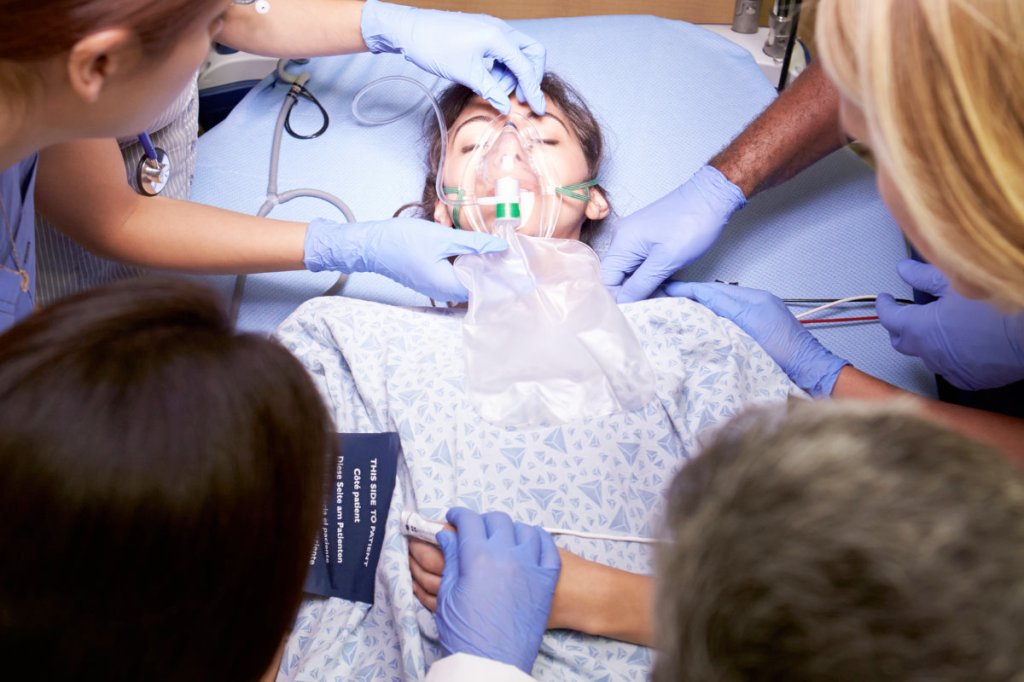
Is any sick among you? let him call for the elders of the church; and let them pray over him, anointing him with oil in the name of the Lord: And the prayer of faith shall save the sick, and the Lord shall raise him up.… — James 5:14,15
By Rick Renner
What should be done if a critically ill person is either bedfast, homebound, or immobile due to his illness yet deeply desires to have special prayer for his healing? Are there special cases when the elders of the church should go to a person’s home to pray for him?
According to James 5:14 and 15, if a person is so extremely ill that he cannot come to church, the elders of the church should go to him. These verses give the scriptural procedure for how to pray for people who are in such a situation. Verse 14 begins by saying, “Is any sick among you? let him call for the elders of the church.…”
The Greek word translated “sick” in James 5:14 does not describe people with minor ailments such as the common cold; rather, this Greek word astheneo refers to people who are physically frail or feeble due to some bodily condition. This deteriorated physical condition has rendered them unable to freely move about; hence, they are homebound by this infirmity and unable to come to church to receive prayer for healing.
In such situations, James says that the believer who is impaired by physical sickness has the right to “…call for the elders of the church…” to come to pray over him, “…anointing him with oil in the name of the Lord.” James 5:15 promises that if faith is present when the elders pray, the Lord will raise up that believer from his bed of sickness.
Let’s really look at this verse to understand the instructions that God gives for praying for such physically ill individuals. First, it says the sick believer should “call” for the elders of the church. The word “call” is the Greek word proskaleo, a compound of the words pros and kaleo. The word pros means toward, and the word kaleo means to call, to invite, or to beckon. When compounded together, it means to summon to one’s side.
The tense used in this verse is so strong that it doesn’t just picture a request for someone to come to one’s side. Instead; it is an ardent plea, so intense that it could almost be perceived as a requirement. In other words, this person is urgently requiring the elders to come pray for him.
James instructs us that a believer in this physically impaired condition is to call for “the elders of the church.” The word “elders” is the Greek word presbuteros, a word that appears no less than sixty-five times in the Greek New Testament. In the Gospels, the word presbuteros (“elders”) was used to depict Israel’s most visible spiritual representatives of the people, such as the ruling members of the local synagogues and the teachers and instructors of the Law who taught in the synagogues. The term itself expresses that these elders are not to be looked upon as common members of a local assembly; rather, they are deemed worthy of honor due to the position they hold.
In Acts 11:30, Luke uses the word presbuteros (“elders”) to describe those who exercised authority and who formed the leadership of the Jerusalem church. In First Timothy 5:17,19 and in Titus 1:5, the apostle Paul uses the term presbuteros to depict those who held officially appointed church offices. In Titus 1:5, Paul instructs Titus to appoint elders in the church; then he follows up in Titus 1:7 by giving Titus the requirements for these elders. However, when Paul begins to list these requirements, he exchanges the word “elder” with the word “bishop.” This is the Greek word episkopos, which definitely points to the ordained leaders of a local assembly. This means that the elders whom the sick believer is to call upon should be among the official or ordained ministers of the local church.
When these elders arrive on the scene to minister to the sick, James says they are to “…pray over him, anointing him with oil in the name of the Lord.” The word “pray” is the Greek word proseuchomai, which represents the act of drawing near to God and passionately petitioning Him to perform a specific act. This is important, for it lets us know that this is not referring to a casual, token prayer but one that is deeply felt and passionately prayed. The tone in Greek again reflects the idea of urgency.
In addition to fervently praying for the sick person to be healed, the elders are also to anoint him with oil in the name of the Lord. The word “anoint” is the Greek word aleipho, and it refers to the outward anointing of the body. Although the exact type of oil is not the main topic of this verse, the Greek word aleipho usually referred to olive oil. We find this word used in Mark 6:13, where we discover that when Jesus sent the apostles forth to minister, “…they cast out many devils, and anointed with oil many that were sick, and healed them.”
Oil itself has no healing properties, but in both the Old and New Testaments, it is used symbolically to depict the Presence of the Holy Spirit. By anointing the sick person with oil, the elder uses a tangible substance to declare that the Spirit of God is coming upon the infirmed to bring His healing power. Although the oil itself doesn’t heal, the moment it is applied in prayer is the critical moment for the sick person to believe that God’s Presence is coming upon him to bring healing to his sick body.
The elders are to perform this action in “the name of the Lord.” The word “name” is from the Greek word onomos, and it represents the full authority that exists in the person being named. By praying in Jesus’ name, a believer actually stands in the physical place of Jesus who is in Heaven, acting on His behalf and operating in the authority He has vested to that believer as His official representative.
Thus, this prayer is prayed by someone who understands he is standing by the bedside of the sick on Jesus’ behalf. As the representative of Jesus Christ, this elder has the right to call on the power of God and to exercise all the authority that belongs to Jesus. What would Jesus do if He were physically present in the situation? That is precisely what this leader is to do as he ministers to the sick in the very stead of the Master.
But even if everything else is done according to this verse, the prayer must also be offered in faith if healing is the desired outcome. Too many pray with no feeling, fervor, or faith, and the results are therefore disappointing. For healing to result according to the promise of James 5:15, the prayer offered must be a “prayer of faith.”
James goes on to say that when faith is present, the elders’ prayer will “save the sick.” The word “save” is the Greek word sodzo, which in this verse definitely describes a physical healing or the restoration of one’s health. The word “sick” now switches from astheneo, which describes a physical frailty or feebleness, to the Greek word kamno, referring to a person who has long suffered from this affliction and is extremely weakened from the effects of this disease.
The next phrase confirms that this is no person with a head cold or minor ailment, for it says that after the oil is applied and the prayer of faith is prayed, “…the Lord shall raise him up….” The word “raise” is the Greek word egeiro, which means to raise, but it is also the root from which we get the word resurrection. This lets us know that the sick person is gravely ill, perhaps even close to death at the time of prayer. This would explain the urgency with which this prayer is to be offered.
James 5:14,15 could be interpreted to mean:
“Is there anyone among you who is extremely weakened due to illness? If there is such a person, let him urgently call for the ordained leaders of the local assembly to come and passionately petition God on his behalf. As the leaders pray, let them also anoint the sick person with oil, standing in the very place of Jesus — acting on Jesus’ behalf and using the authority of His name. The prayer offered in faith will have definite results, for it will restore the sick person’s health as the Lord raises him up from his bed of affliction.”
It must be pointed out that it is “the Lord” who raises up the sick man from his bed of affliction. Although the elders actually anoint the person with oil and pray the prayer of faith, it is God who works with them and performs the miracle of healing. Here we see a beautiful picture of God and man working together to bring healing to those who are sick and disabled.
If you know anyone who is so gravely ill or weak that he is unable to come to church to receive prayer for his healing, let that person know he has a scriptural right to call for the elders of the local church to come anoint him with oil and pray the prayer of faith. As these elders stand at the sick person’s bedside, acting and speaking on Jesus’ behalf, James 5:15 promises that God’s power will be ignited to raise him up from his bed of affliction!
_________________________
Rick Renner is a prolific author and a highly respected Bible teacher and a leader in the international Christian community. He is the author of more than 30 books, including the bestsellers Dressed To Kill and Sparkling Gems From the Greek.
In 1992, Rick and his family moved to what is now the former Soviet Union. Two years later, he and his wife Denise founded the Riga Good News Church in Latvia before moving on to Moscow in 2000 to found the Moscow Good News Church. In 2007, the Renners also launched the Kyiv Good News Church in the capital of Ukraine. Today, Rick serves as Bishop for this group of churches.
In addition, Rick and Denise pioneered a Bible school, and a ministerial association that serves thousands of Russian-speaking pastors throughout the former USSR as well as parts of the Middle East.
Rick also founded Media Mir, the first Christian television network established in the former USSR. Its broadcast capabilities via terrestrial stations in Russia, Ukraine, Mongolia, Estonia, Poland, Latvia, Armenia, Georgia, and Moldova, and as well by satellite means millions of people are reached with these messages. It has since expanded into book publishing and managing social media accounts. Website: Renner.org


 OpentheWord.org
Leave a comment