

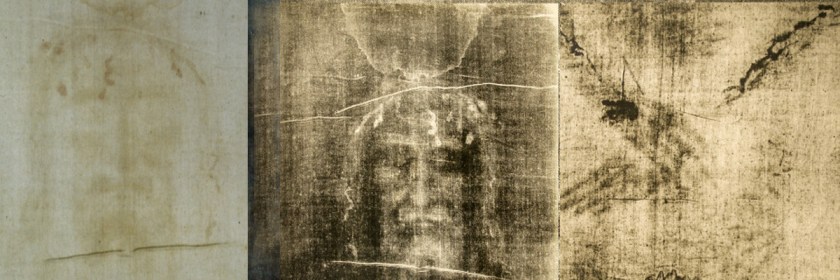
Early protestant reformer John Calvin (1509-1564) was one of the first to question the Shroud of Turin’s authenticity, that some believe is the burial cloth used to wrap Christ’s body.
Burned into the Shroud is an image of a man with long hair and a beard that is the basis of most modern paintings used to portray Christ today. It is believed the image was created when God miraculously raised Christ from the dead.
Calvin who was not enamoured with the Roman Catholic church used scripture to refute the claim. He pointed to John 20:6-7 where it says there were two pieces of cloth, one for the body and a smaller piece of linen that the disciples wrapped around Christ’s head.
Defending the shroud’s authenticity, some argue that the larger piece could still have covered the full body.
And despite the fact Pope Francis prayed before the cloth in June 2015, the Roman Catholic Church has not made an official declaration on the shroud (14 feet 5 inches by 3 feet 7 inches) kept at the Cathedral of Saint John the Baptist in Turin, Italy.
However, recently researchers from the Institute of Crystallography in Bari, Italy, the Istituto Officina dei Materiali in Trieste, Italy and from the Department of Industrial Engineering at the University of Padua made some startling claims about the cloth.
Using high-tech electron microscopes and Wide Angle X-Ray Scanning microscopes, their testing of the human blood found on the cloth indicated the person had been tortured.
In an article, “New Biological Evidence from Atomic Resolution Studies on the Turin Shroud” written for the scientific magazine PlosOne, the researchers said the shroud’s blood stains contain large quantities of substances called ferritin and creatinine.
This is not typical of normal blood.
These substances only show up in higher amounts in the blood of people who have experienced serious trauma which would include torture.
Speaking for the group, Glulio Fanti from the University of Padua said:
“Hence, the presence of these biological nanoparticles found during our experiments point to a violent death for the man wrapped in the Turin Shroud.”
Though these tests do not prove conclusively this is the shroud that covered Christ’s body, it fits the description.
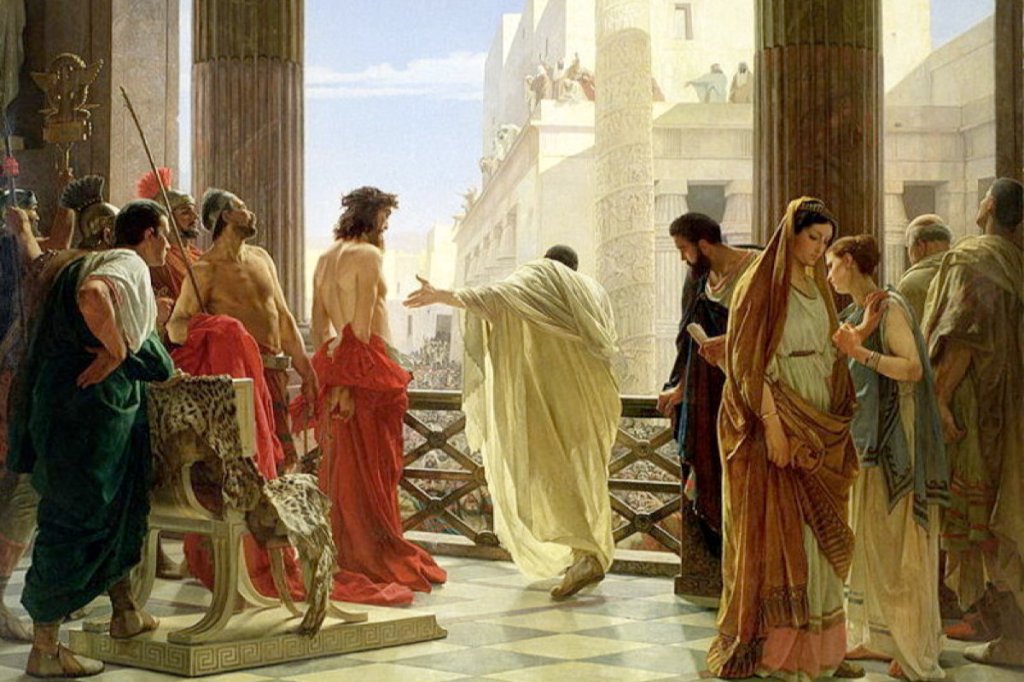
Previous tests of the shroud found human blood on the wrists and feet which some believe indicates crucifixion. There are also blood stains on the head and beard that would come from the crown of thorns and the hits on the head by the Roman guards (Mathew 27: 29-30). Blood found on the back could be a result of a scourging (Mathew 27:26).
Sources:
- Shroud of Turin, believed to be burial cloth of Jesus Christ, carries blood of torture victim: Study: Gospel Herald
- New study on Shroud of Turin concludes image could not have painted, points to ‘a violent death’: aleteia.org
- Shroud, new study: there is blood of a man tortured and killed: Vatican insider
- Shroud of Turin website: Outlines various tests done on the burial cloth

 OpentheWord.org
Leave a comment